Many POSM campaigns are designed with urban retail in mind. But when those same materials arrive in semi-urban towns or rural stores, something changes. The environment is different. The way people shop is different. Even the way information is absorbed can be different.
For brands trying to reach these markets, success often depends on adaptable POSM that responds to the realities of non-urban retail.
Simpler messages travel further
In many rural stores, shoppers do not spend long periods studying detailed product information. Purchases tend to be quicker and more practical, often made while scanning the shelf rather than reading packaging in detail. Clear messages therefore matter more than clever wording.
POSM should communicate:
- one key benefit
- one clear reason to buy
- one simple visual cue
Large text, straightforward language, and strong visual icons often work better than dense copy. Even a simple shelf sign highlighting “NEW” or a key benefit can immediately catch attention and guide the shopper’s choice.
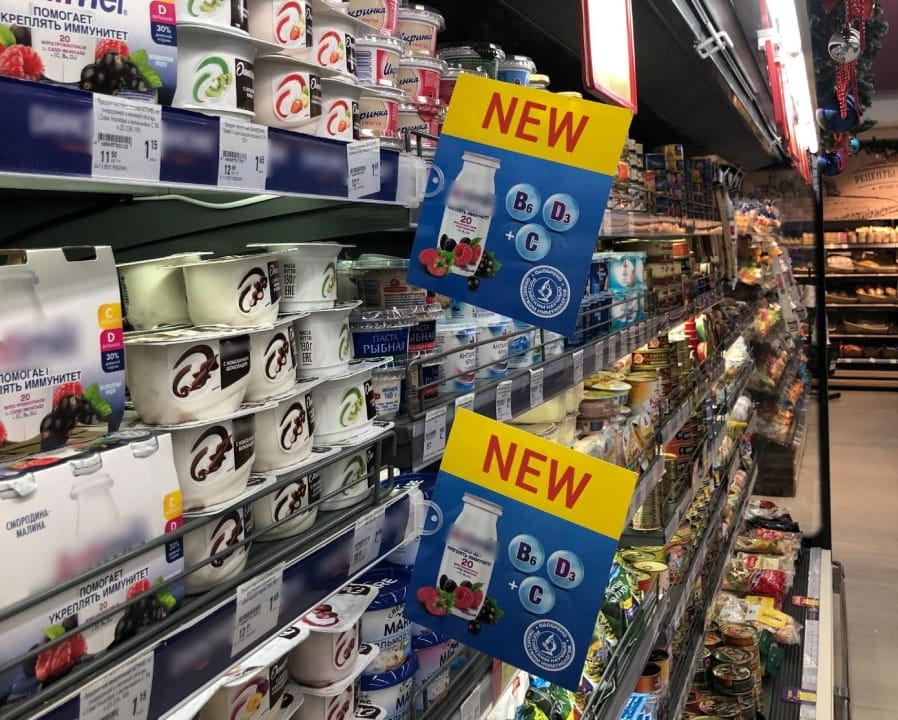
Case in point: Simple shelf POSM with bold headlines helps shoppers quickly identify key benefits without needing to read detailed information.
Durability matters as much as design
Retail conditions outside major cities can be tougher on display materials.
POSM may be exposed to:
- higher humidity
- dust and open airflow
- uneven flooring
- frequent handling
- sunlight near store entrances
Displays that look perfect in shopping malls may start bending or fading quickly in these environments.
Adaptable POSM therefore often uses:
- thicker boards or reinforced bases
- rugged materials or simple crate-style structures that can withstand heavy use
- laminated or wipeable surfaces
- fewer fragile extensions
- modular components that are easy to replace
The goal is simple. POSM that still looks presentable after weeks, not just the first few days.

Case in point: Rugged crate-style dump bins demonstrate how durable POSM can remain functional and presentable even in high-traffic retail environments.
Visual education helps unfamiliar categories
Another difference is product familiarity.
In some rural or semi-urban markets, shoppers may be encountering certain product categories for the first time. POSM therefore has to do more than attract attention. It must also explain quickly how the product works or which option to choose.
Simple visual storytelling can help:
- step-by-step usage illustrations
- problem-solution graphics
- before-and-after visuals
- icons showing when or how to use the product
- simple guides that help shoppers select the right variant
Instead of describing a cleaning technology in text, a simple visual sequence such as dirty surface → spray → clean surface may communicate the benefit far more effectively.
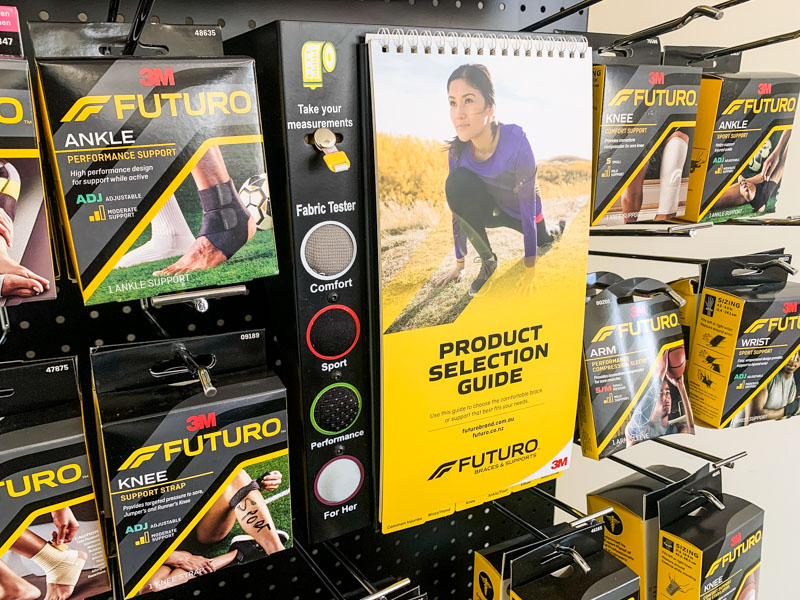
Case in point: Selection guides and visual icons help shoppers quickly identify the right product variant at the shelf.
Designing for stores with limited infrastructure
Urban retail often assumes stable lighting and easy access to power. That assumption does not always hold outside major cities.
Some displays may sit in dim stores or areas without electrical outlets.
Instead of relying on digital screens or powered lightboxes, adaptable POSM can create visibility through simpler techniques:
- reflective or high-contrast materials
- moving elements such as hanging mobiles
- bold colour blocks that stand out in low light
Even small elements of motion or reflection can catch attention in environments where most displays are static.
Smaller spaces require smarter formats
Many rural stores are compact and multi-purpose. The same counter may handle groceries, bill payments, and daily conversations.
POSM that demands too much space can quickly become inconvenient for the retailer.
Formats that work well in these settings tend to be:
- slim vertical floor displays that fit neatly into narrow aisles or near checkout areas
- slim countertop displays
- hanging strips near payment areas
- shelf talkers highlighting one key benefit
- small dump bins for sachets or trial packs
Instead of dominating the store, the display fits naturally into the retail flow while still keeping products visible and easy to grab.
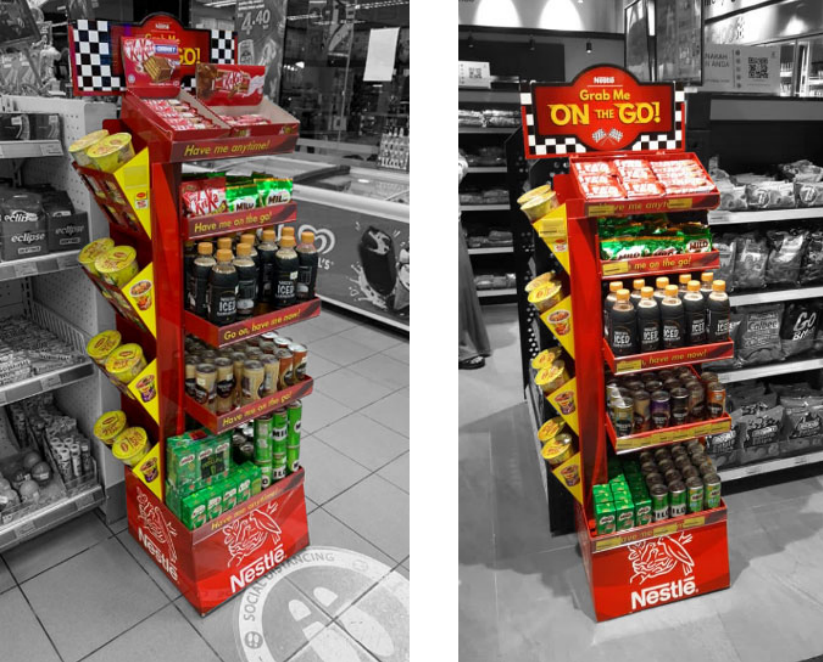
Case in point: Selection guides and visual icons help shoppers quickly identify the right product variant at the shelf.
The role of the shopkeeper
In many communities, the shopkeeper’s recommendation still carries significant influence.
POSM that supports this interaction can be particularly effective.
This might include:
- simple benefit cues the retailer can easily repeat
- clear price or value messages
- bundle offers that are easy to explain
When POSM reinforces what the shopkeeper is already saying, the display becomes part of the sales conversation rather than just background decoration.
Reaching beyond the city
Rural and semi-urban markets represent significant opportunity for many brands. But reaching these consumers effectively requires a different design mindset.
Success in these markets rarely comes from making POSM bigger or flashier. It comes from making it simpler, tougher, and easier to understand.