When budgets tighten, shoppers don’t stop buying. They simply shop differently.
Price-sensitive shoppers are not chasing the cheapest option. They are looking for reassurance that their money is being spent wisely. In this context, POSM can shape how value is perceived and justified at shelf.
Winning here is less about shouting “SALE” and more about answering one question every budget-minded shopper asks: Is this worth it?
Understanding the Budget-Minded Shopper
Price-conscious shoppers are deliberate. They compare pack sizes, read shelf labels, and pause longer at displays that help them calculate value quickly.
They respond well to:
- Clear unit pricing and size comparisons
- Bundles that reduce decision fatigue
- Visual cues that signal smart buying rather than impulse buying
POSM that respects this mindset feels helpful, not pushy. It simplifies the choice instead of pressuring it.
Bundles That Feel Like Smart Decisions
One of the most effective tools for value perception is the bundle stack.
When multiple units are grouped together physically, shoppers instinctively register “more for less”, even before reading the price. The visual mass communicates savings faster than any sticker can.
Why it works:
A stacked bundle reduces mental maths. Shoppers don’t need to ask whether buying two is better than one. The display has already answered for them.
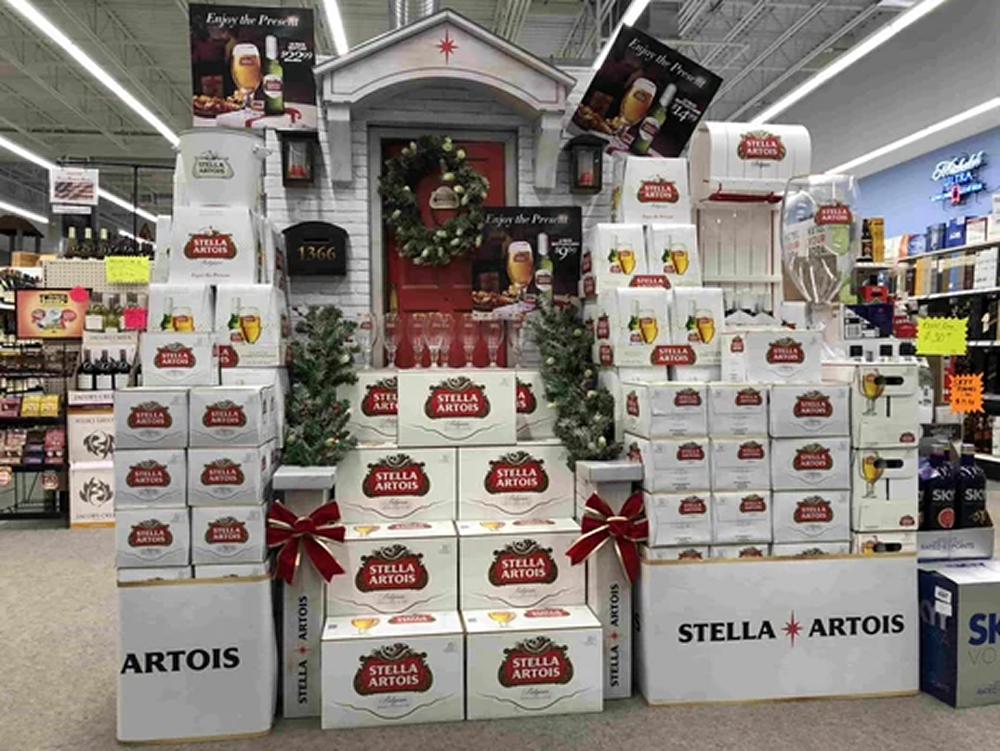
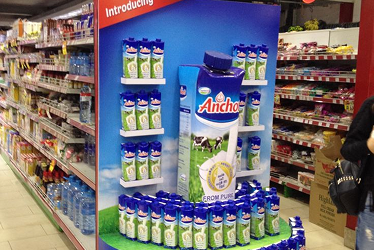
Case in point: A high-impact bundle stack turns volume into value. By physically grouping multiple cartons into one cohesive display, the POSM instantly signals “stock up and save” without relying on heavy discount messaging. The scale of the bundle does the persuasion, reducing decision effort and making the value obvious at a glance.
Comparative Pricing That Builds Trust
Price-sensitive shoppers distrust vague claims. “Best Value” means nothing without context.
Comparative POSM works when it does one thing well: it shows why something is better value, not just that it is.
This could be:
- “2 x 1L vs 1.5L” comparisons
- Cost-per-use breakdowns
- Side-by-side pack size visuals
Why it works:
Transparent comparisons reduce buyer’s remorse. When shoppers feel informed, they feel confident.
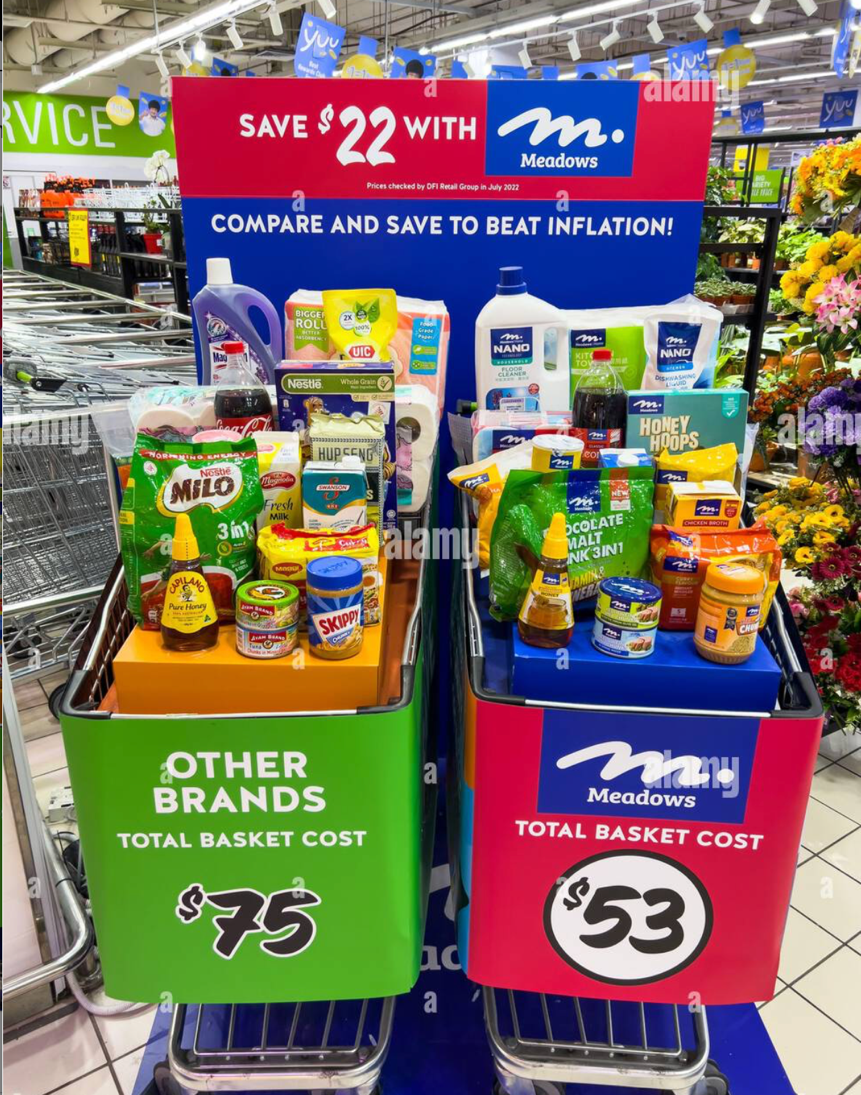
Case in point: A clear side-by-side comparison turns price into proof. By showing two full baskets with their total cost clearly displayed, this POSM removes ambiguity and makes value measurable at a glance. Instead of claiming “better value,” it demonstrates it.
“More for Less” Without Screaming Discount
Heavy discount language can sometimes backfire, especially for everyday essentials. It signals urgency, not reliability.
Value-focused POSM takes a calmer tone:
- “Family Pack”
- “Stock-Up Size”
- “Better Value per Use”
These phrases reassure shoppers that the product fits into everyday life, not just a one-off deal.
Why it works:
Budget shoppers want consistency. POSM that feels stable and practical builds longer-term loyalty than flash discounts.
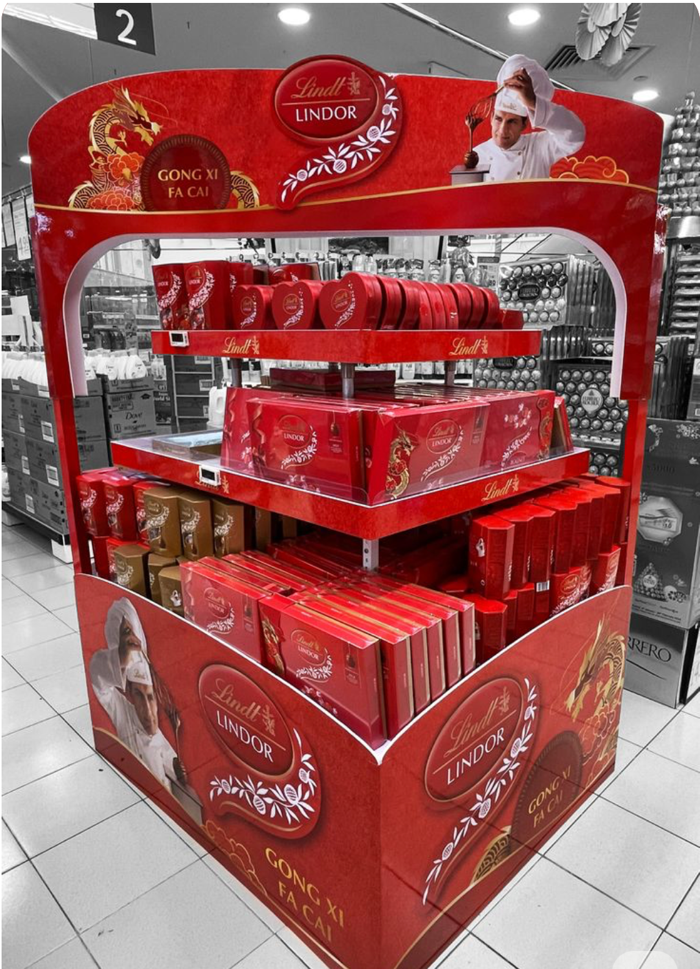
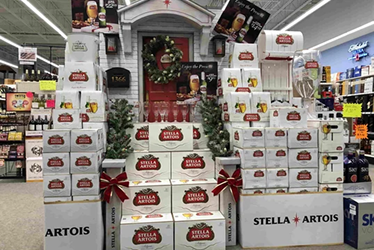
Case in point: Value can be communicated without shouting. This festive bulk display leans on scale, structure, and clear pack presentation rather than loud discount callouts. By spotlighting larger packs and stock-up formats in a calm, premium setting, the POSM signals “worth buying in quantity” instead of “buy now or miss out”.
Clarity Beats Creativity at the Shelf
For price-sensitive segments, clarity is the creative idea.
The best value-driven POSM avoids:
- Overdesigned typography
- Complicated colour coding
- Promotional clutter
Instead, it prioritises:
- Large, legible pricing
- Simple icons
- Straightforward benefit hierarchy
When shoppers understand the offer in three seconds, the POSM has done its job.
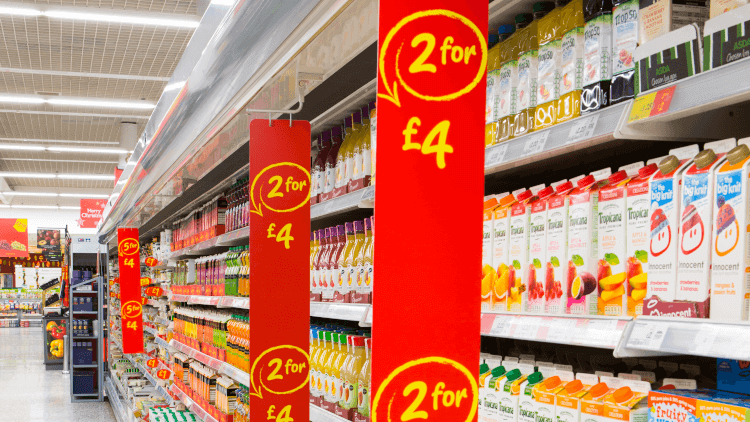
Case in point: Large, high-contrast price markers repeat the same simple message along the aisle, making the offer impossible to miss or misinterpret. There are no competing colours, no extra claims, and no visual noise. Shoppers understand the value in seconds, which is exactly what effective price-led POSM is meant to do.
Value Is a Feeling, Not a Formula
Discounts trigger attention. Value earns trust.
Well-designed POSM for price-sensitive shoppers doesn’t make people feel cheap. It makes them feel smart. It respects their need to plan, compare, and justify their choices, especially in uncertain times.
And that’s the difference between a one-time deal and a brand that becomes part of a household’s routine.
In value-driven retail, the quiet displays often outperform the loud ones.