From Shelf to Structure: When the Product Shapes the Display
Retail displays are often built the same way. A structure is designed first, and products are then placed into it.
But some executions reverse that process. Instead of starting with the display, they start with the product — its shape, its form, or how it is experienced, and let that define the structure itself.
When this happens, the display feels more immediate. Shoppers do not need to look for the product within the display. They recognise it instantly.
Below are several ways brands use the product itself to shape the display.
Building the display around the product
Some executions take the most direct approach by turning the product into the structure itself.
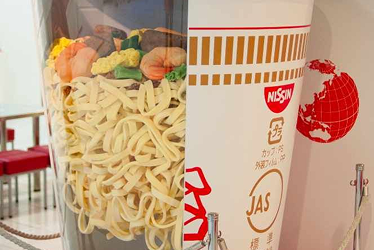
The oversized noodle cup is a clear example. The entire installation is built around the product, from the cup form to the lifted lid and visible noodles inside. It does not sit on a display. It is the display.
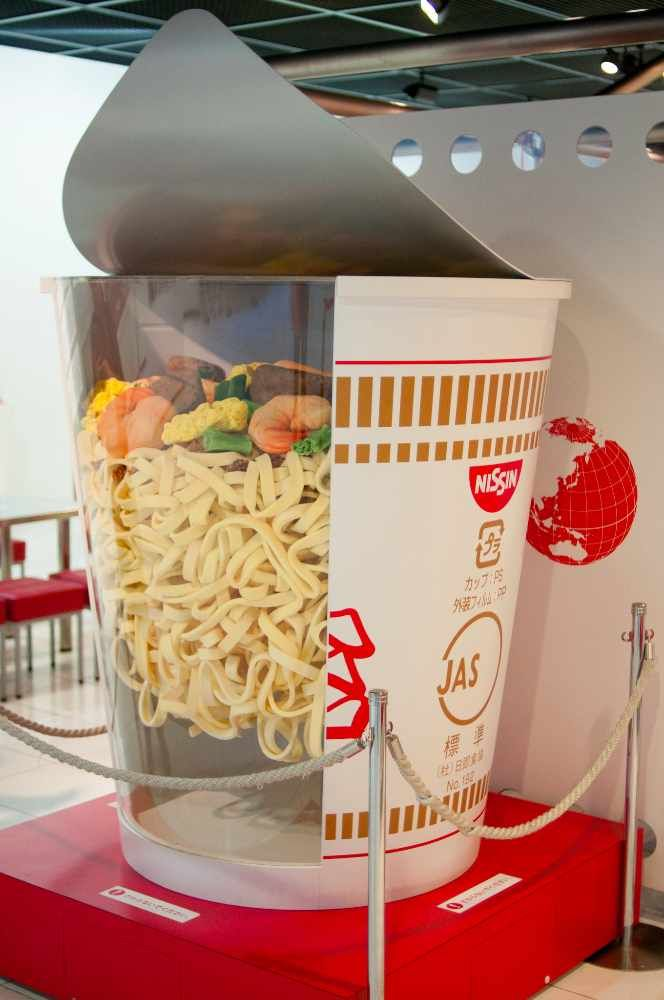
Because the structure mirrors the packaging so closely, recognition happens almost immediately, even from a distance.
Translating product form into structure
Other displays take cues from the product without replicating it exactly.
The Chivas Regal unit does not copy the bottle shape directly, but the structure clearly reflects the product’s premium positioning. The angular form frames the bottles and gives the display a sense of presence that standard shelving cannot achieve.
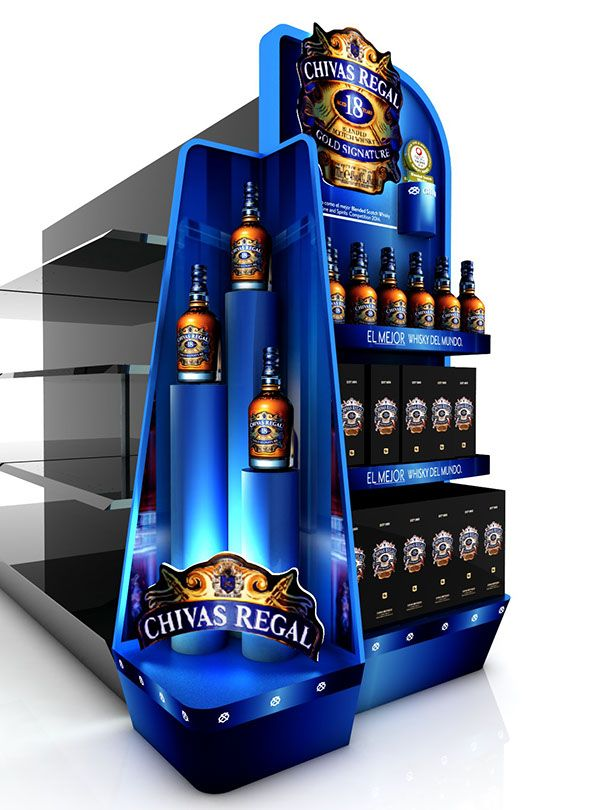
The result feels tailored. It is not a generic display with branding added on, but something built specifically for that product.
Using repetition as the structure
In some cases, the product itself becomes the building material.
The whiskey bottle display stacks the product into a tower, using repetition to create both height and visual impact. There is no need for additional graphics or storytelling elements. The product is repeated until it becomes the structure.

From afar, the shape is already recognisable. Up close, the repetition reinforces the product even further.
Extending the product into the shelf space
Not all executions rely on scale or structure. Some work by extending the product into the shopper’s line of sight.
The Danette shelf display curves outward from the shelf, echoing the shape of the product and drawing attention away from the flat shelf edge. It feels like a small extension of the product itself rather than a separate sign.
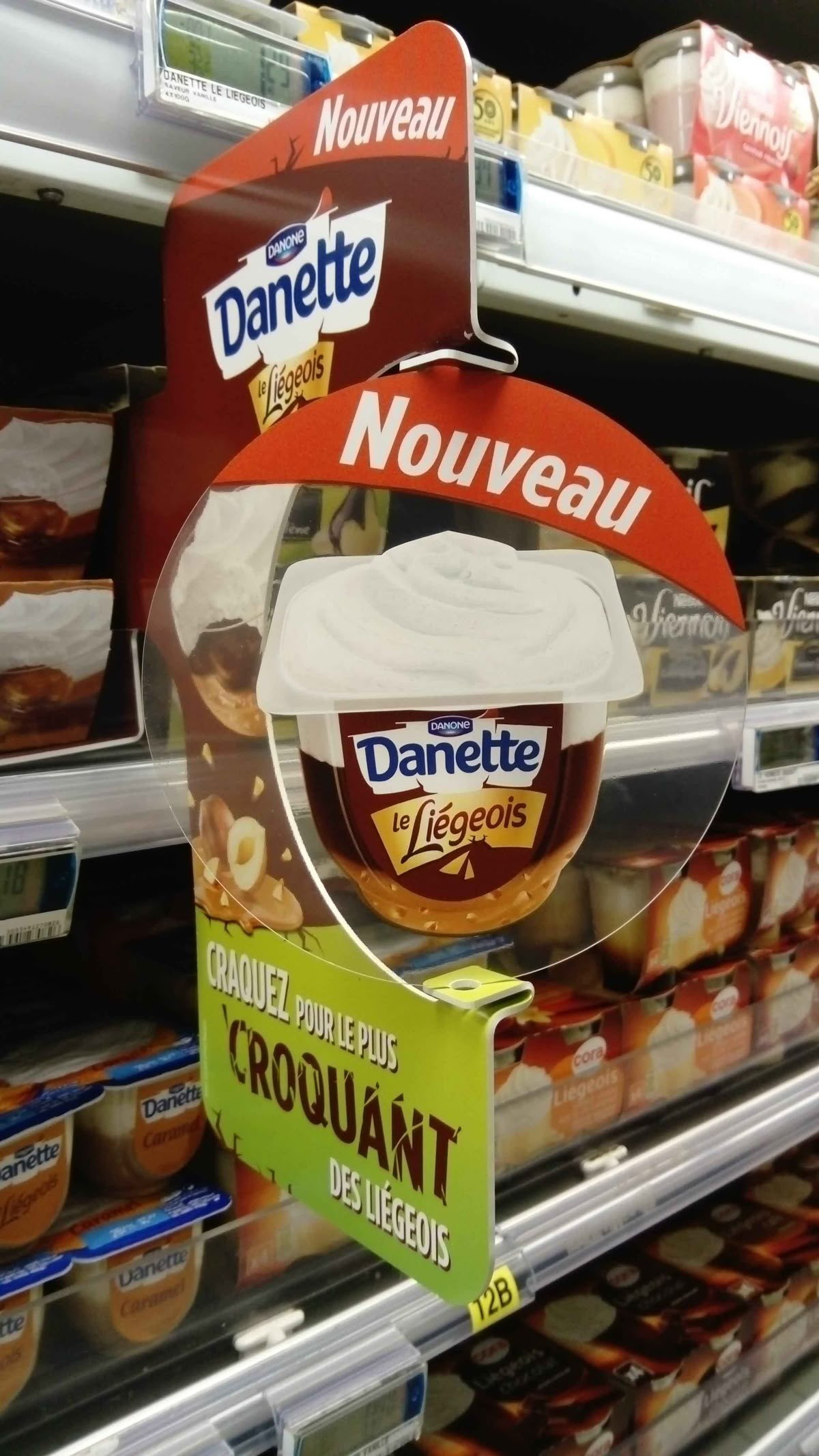
This kind of intervention is subtle, but effective. It breaks the straight lines of the shelf and creates a focal point within a crowded aisle.
Turning multiple packs into a single visual
The Tang display uses a different approach by combining multiple packs into one larger visual.
Individual packs are arranged into a circular structure, reinforced by a base that resembles a splash. The display does not rely on a single oversized element. Instead, it builds impact through accumulation.
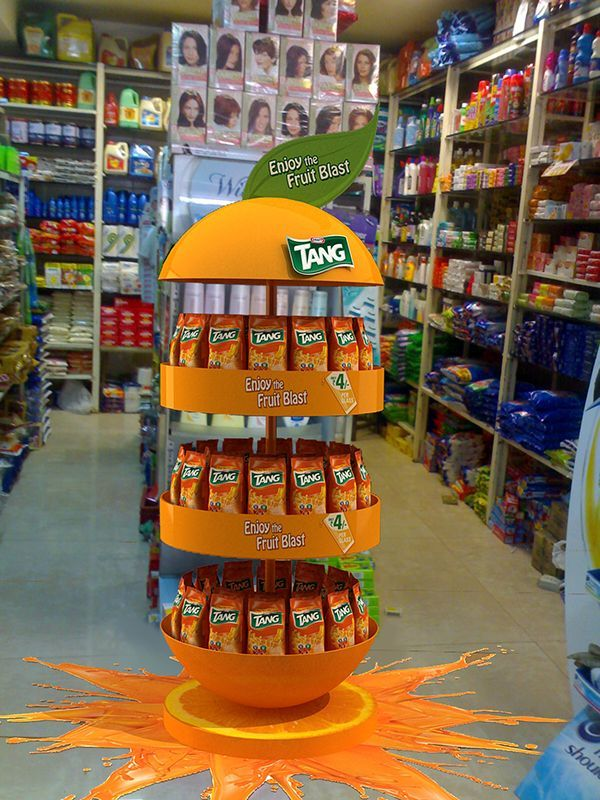
The product remains clearly visible, but together they form something larger and more noticeable.
Why this approach works
These executions work because they reduce the gap between the display and the product.
In many retail environments, shoppers first notice a display, then look for the product within it. That extra step takes time and attention.
When the product shapes the display, that step is removed. Recognition happens first, without the need to search.
And in retail, where attention is limited, that clarity often matters more than anything else.