When POSM Becomes the Environment: Designing Beyond the Shelf
Most POSM is designed to sit within a space. On shelves, beside products, or within clearly defined retail areas.
But some executions take a different approach. Instead of fitting into the environment, they use the environment itself as the medium.
When this happens, the display becomes part of how people experience the space. Below are several ways brands design POSM that goes beyond the shelf.
Using movement that already exists
Some of the most effective executions do not introduce new elements. They work with movement that is already part of the environment.
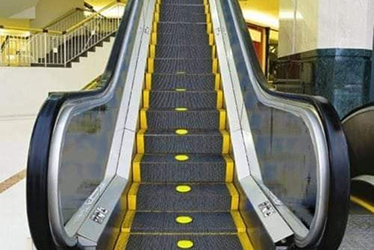
An escalator, for example, is something people use without thinking. But when the steps are turned into a Pac-Man sequence, the experience immediately changes. The motion is the same, but now it carries meaning.
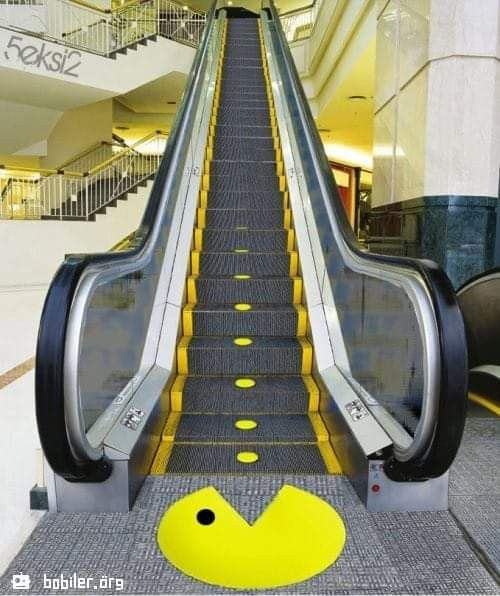
Instead of placing a display next to the escalator, the escalator itself becomes the display.
Turning function into communication
Functional elements such as doors are often ignored because they are part of everyday routine.
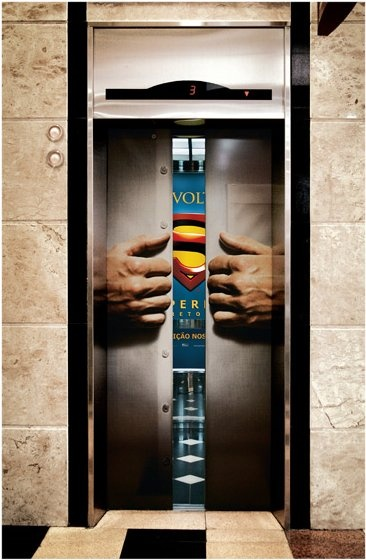
But when lift doors are designed as hands pulling apart, the simple act of opening becomes part of the idea. The visual only makes sense when the doors move.
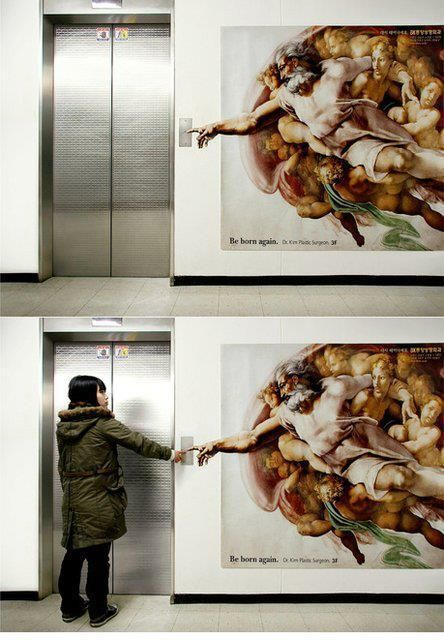
The same applies to the elevator wall where a famous painting is extended across the space. When someone presses the button, their hand completes the image, turning a familiar artwork into a moment of interaction.
In both cases, the message is not fully visible all the time. It is completed by the user’s action.
Extending beyond the frame
Most POSM stays within a fixed boundary, such as a panel or a billboard.
Some executions break that boundary. A bus stop ad where a water pipe appears to extend out of the panel, with water flowing into the real world, creates a much stronger visual impact.
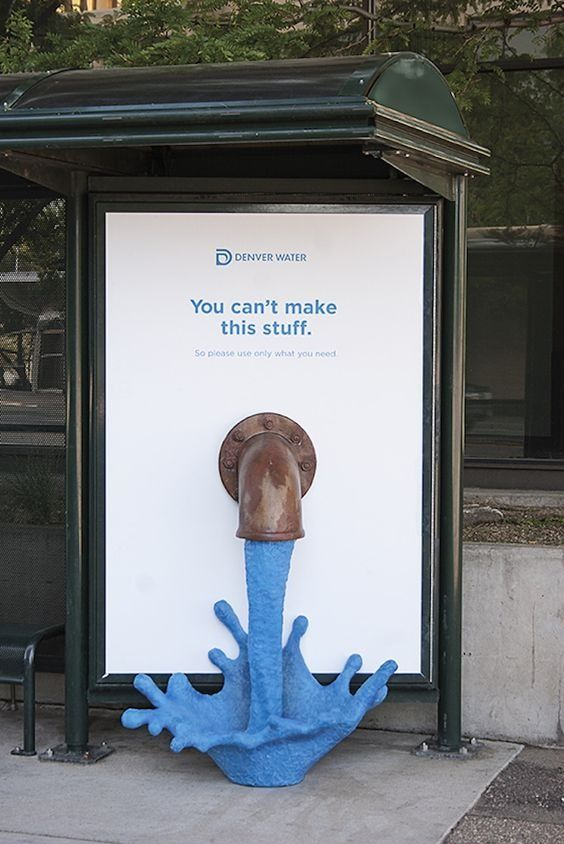
The idea no longer sits on the surface. It becomes something physical, occupying the same space as the viewer.
By moving beyond the frame, the message feels more immediate and harder to ignore.
Using architecture as media
At a larger scale, entire structures can become part of the display.
A building facade with a Mini Cooper mounted vertically turns a standard outdoor placement into something much more noticeable. The building itself becomes the backdrop, and the product becomes part of the structure.
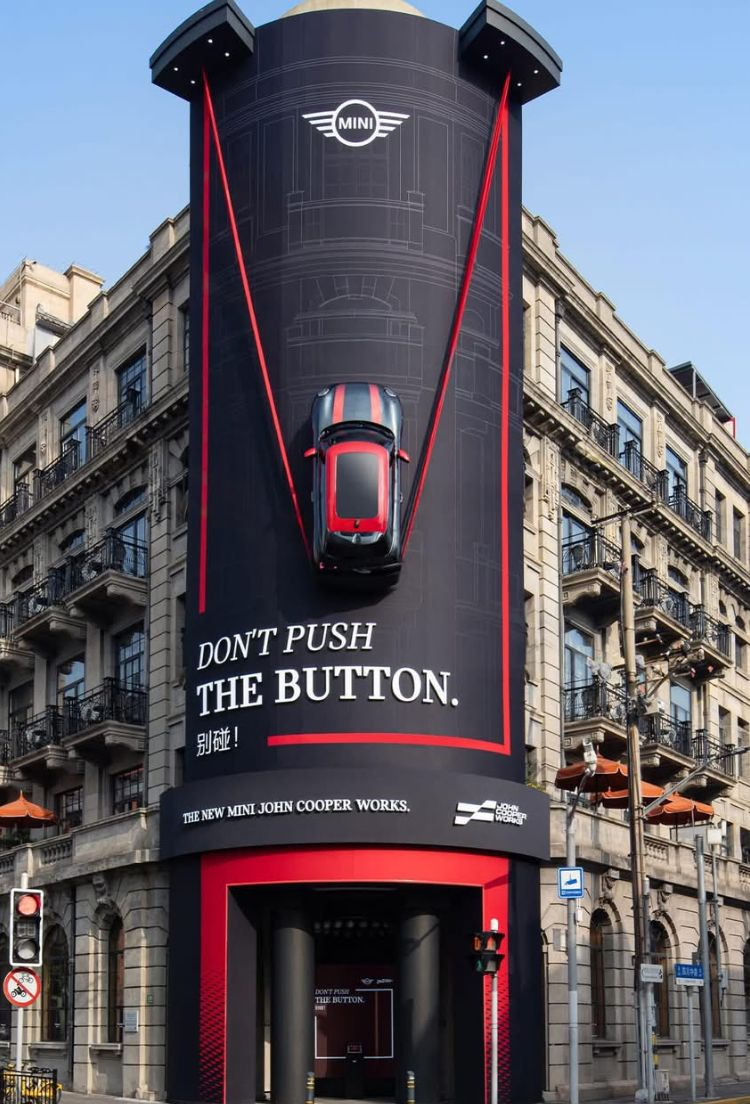
From a distance, people do not process it as a typical advertisement. They react to the object first.
Why this approach works
These executions work because they change what people expect from the environment.
Shoppers and pedestrians are used to seeing posters, shelves and screens. These are easy to ignore because they are familiar.
But when an escalator tells a story, or a door becomes part of the message, it breaks that routine. The environment behaves differently, and that difference captures attention.
Designing beyond placement
This approach also shifts how POSM is considered.
Instead of asking where a display should be placed, the better question is what part of the environment can be used.
Movement, surfaces, transitions and structures can all become part of the idea.
POSM does not always need to be bigger or louder to stand out.
Sometimes, the most effective solution is to stop adding to the space, and start using it differently.
When the environment itself becomes the display, attention follows naturally.