Most POSM is designed to be noticed. Some are designed to be experienced.
Instead of relying purely on visibility, these executions invite people to step into the idea physically. Sometimes through interaction, sometimes through movement, and sometimes simply by creating something people instinctively want to photograph or share.
When that happens, the display becomes an activity, a prop, or part of the environment itself.
Below are several ways brands use participation to turn attention into engagement.
Turning the audience into part of the display
Some executions only fully work when people step into them.
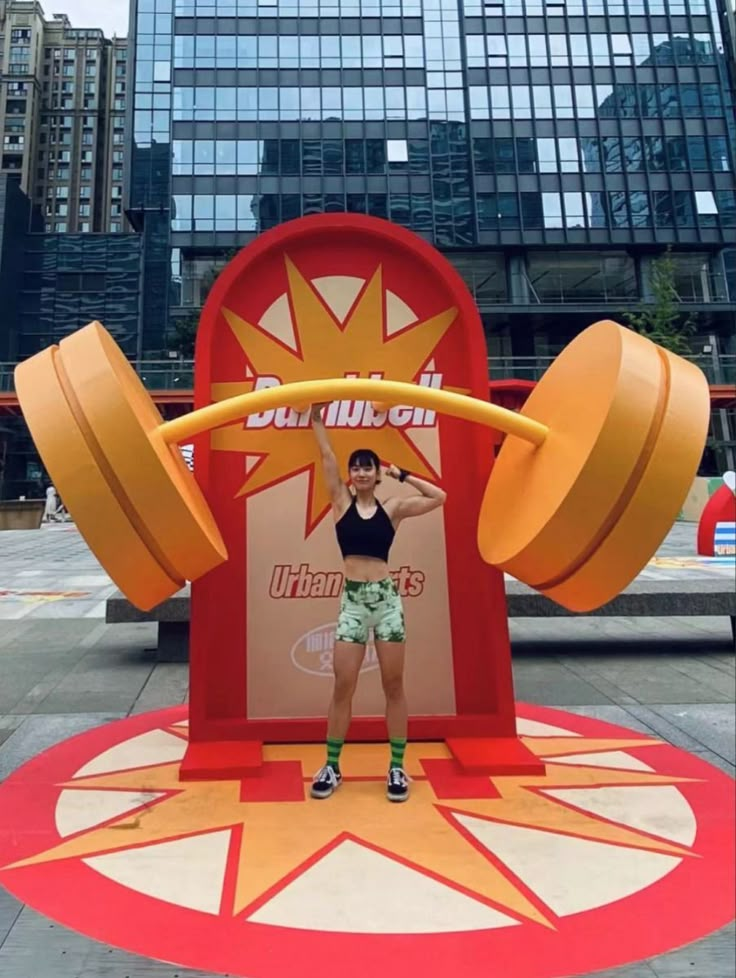
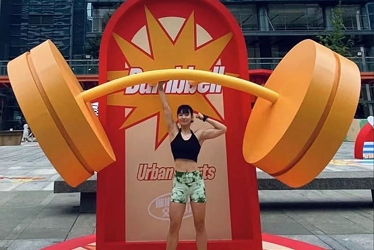
The oversized weightlifting installation is a clear example. Structurally, it is simple: giant weights, bold framing, and a central standing position. But the moment someone stands underneath the barbell, the visual changes completely. The shopper becomes part of the communication.
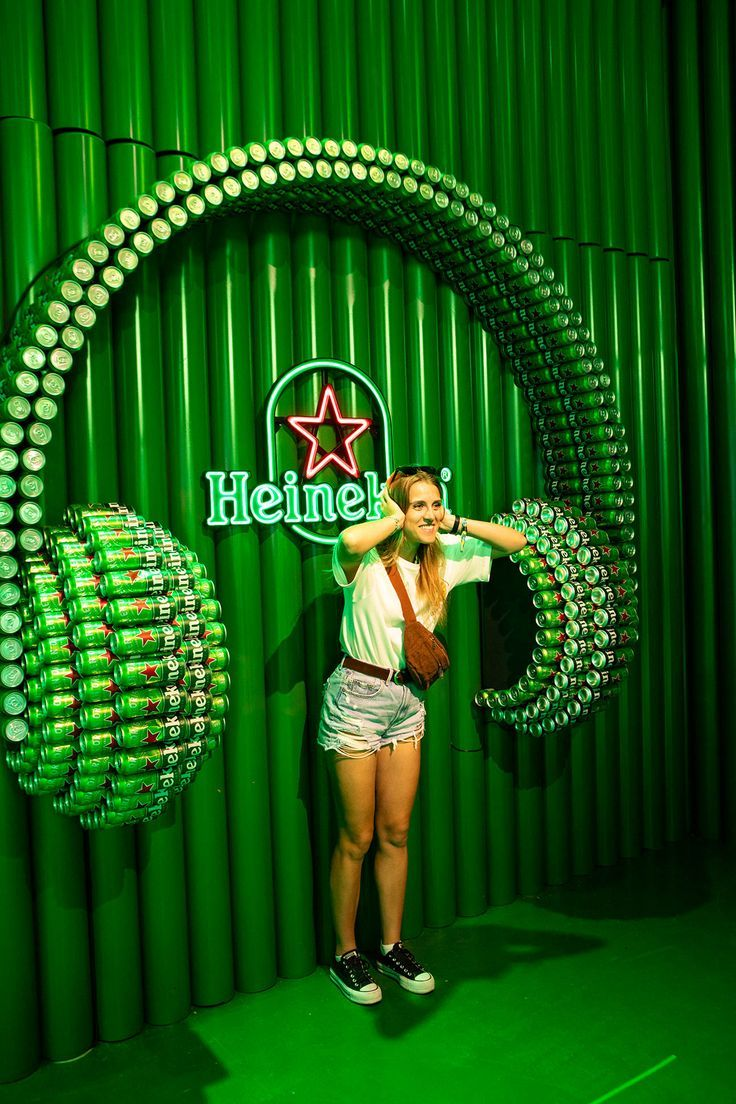
The same principle appears in the Heineken installation. The oversized headphone-like structure creates an immersive environment that people naturally walk into and photograph. The display is not simply viewed from the outside. It is designed to place the audience at the centre of the brand experience.
In both cases, participation is not an extra feature added afterward. It is the core mechanism that makes the display work.
Using movement to create interaction
Participation does not always require large-scale installations.
Some executions become effective because they move through public space instead of remaining static.
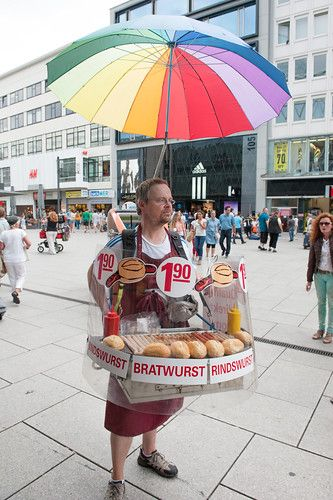
The giant bratwurst walking tray transforms product sampling into street theatre. Rather than waiting for people to approach a booth, the display itself travels through crowded areas, using scale and humour to create instant visibility. People react not only because the structure is oversized, but because it behaves unexpectedly within the environment.
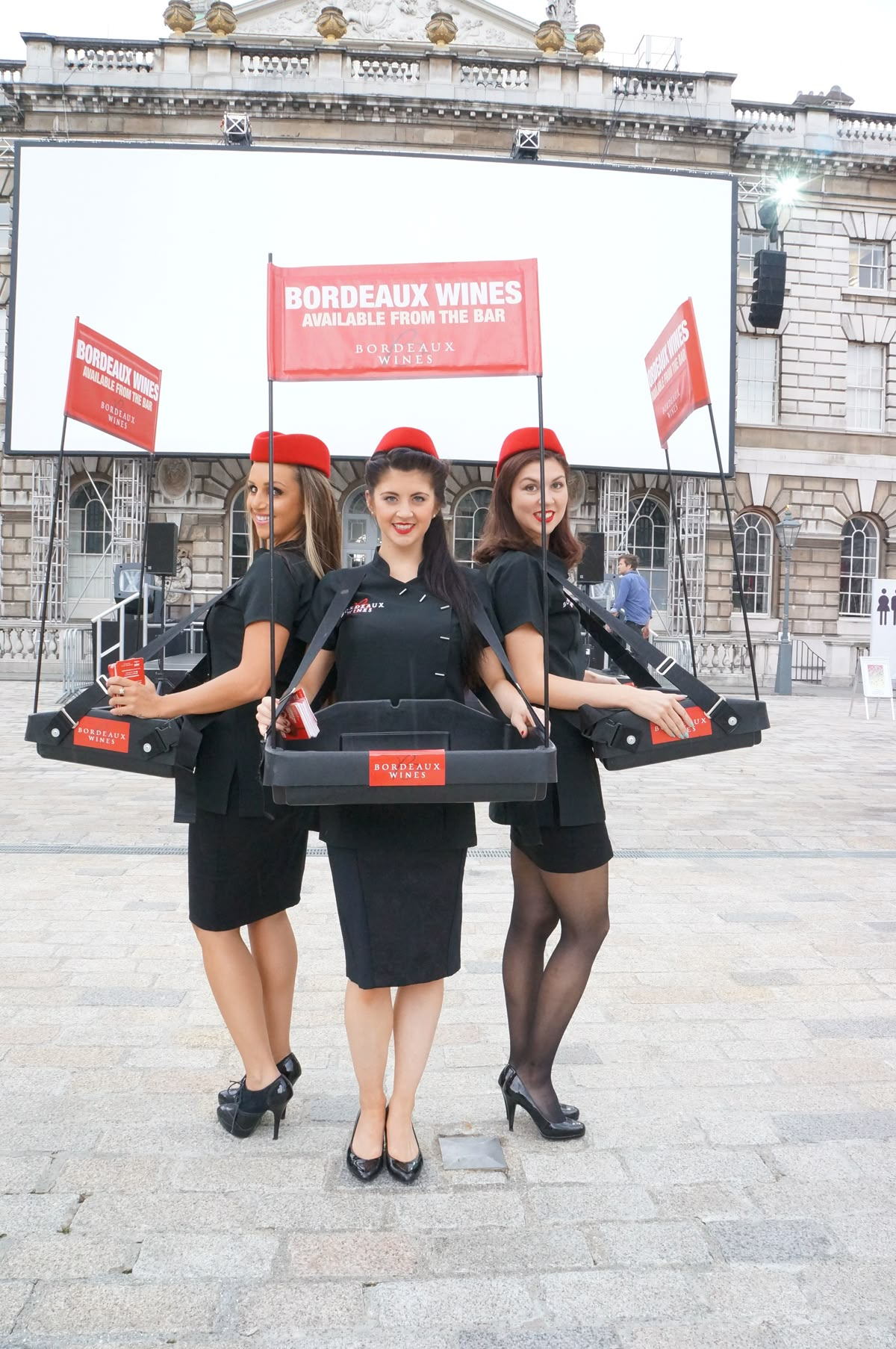
The beverage sampling backpack team operates similarly, though in a more practical format. Instead of relying on fixed retail placement, the display moves directly into areas with high foot traffic, creating interaction through proximity and direct engagement.
In both examples, mobility becomes part of the communication strategy.
Reworking everyday behaviour
Some participatory executions take ordinary behaviour and amplify it into something highly visible.
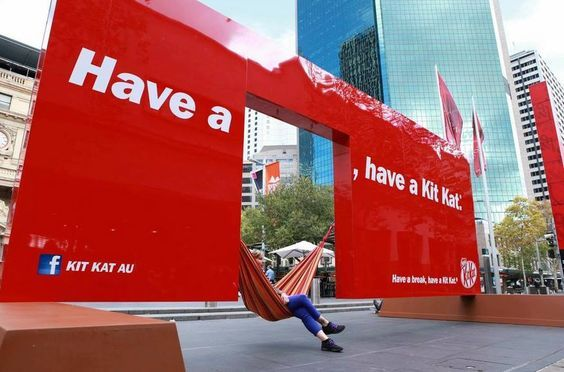
The KitKat installation is built around a very familiar action: taking a break. But instead of communicating that idea through a poster or slogan alone, the brand transforms it into a physical experience by suspending a real resting space within the structure itself.
The oversized installation works because the interaction feels immediately understandable. Even from a distance, the hammock-like seating and open structure communicate pause, rest, and escape from the surrounding city movement. The public space itself becomes part of the experience.
This approach demonstrates how participation does not always need complicated technology or mechanics. Sometimes, creating a physical version of the brand idea is enough to draw people in naturally.
Why participation changes attention
These executions work differently from traditional POSM because they create involvement instead of passive exposure.
People may glance at a standard display for a second or two. But when a display invites someone to stand inside it, interact with it, photograph it, or physically engage with it, the experience becomes more memorable.
Participation also changes how people share the brand. Instead of only consuming the communication, they help distribute it themselves through photos, videos, and social interaction.
In retail and public environments where visual clutter is constant, attention is increasingly difficult to buy.
Participation creates it more naturally.