
A cardboard display stand can look fine at sample approval but start to buckle a week into the campaign. The sample may have been checked empty, while the store filled every shelf, placed it next to a chiller and restocked it twice a day.
To make a cardboard display stand retail-ready, test the final design with the actual products under conditions close to those it will face in store. Check what happens before it reaches the shop floor, too: delivery, storage and assembly can all affect how it performs.
1. Shelves sag under the stock
A shelf can look fine in a quick test but start to sag after it’s been fully stocked for a while. Twelve bottles at 500g each put 6kg on one shelf. If staff pull stock forward as it sells, the front edge may carry more of that weight.
Load the shelf to capacity, then check it again with the remaining stock pulled forward. Leave it stocked long enough to see whether it bows over time. If the shelf bows, try a centre support or a shorter unsupported span before upgrading the entire unit.
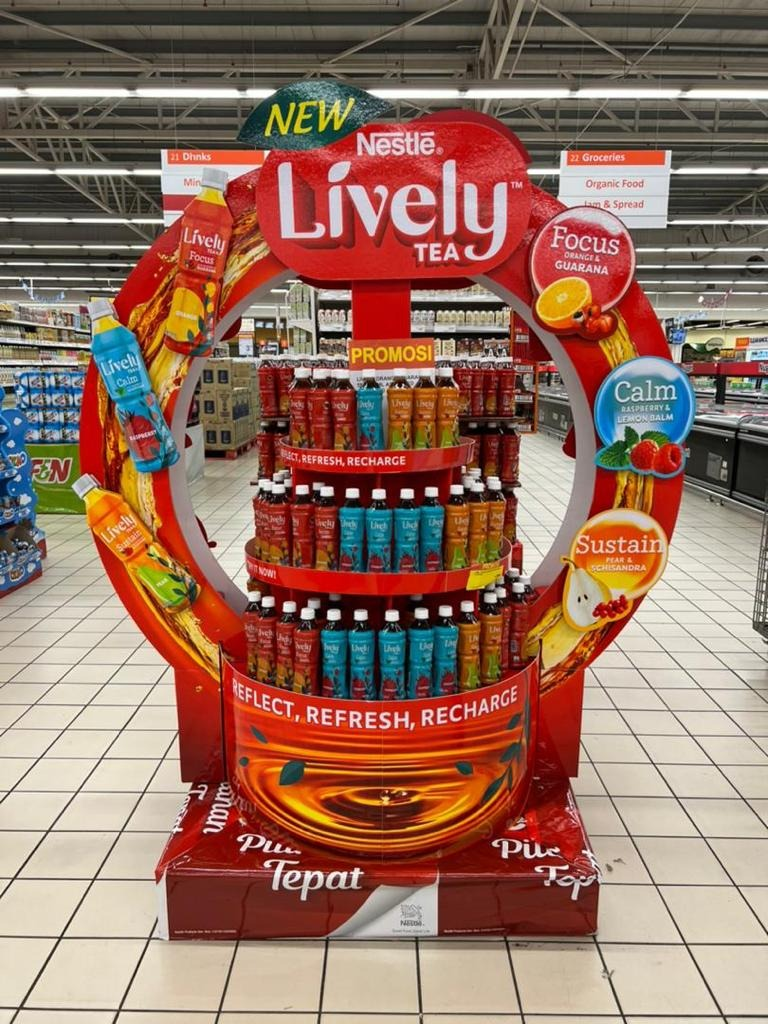
A stocked Nestlé Lively Tea display. Count the bottles on each tier when specifying the shelf load.
2. The stand wobbles or tips
A tall stand with a shallow base may feel steady when it’s full but start to wobble once the lower shelves are empty. Test it fully stocked and again with only the upper shelves stocked. Take a product from the top shelf as a shopper would and check whether the base lifts or shifts.
If the stand wobbles, try a wider base or move heavier products to the lower shelves. Before approving a wider base, check that it fits the space the retailer has allocated.
3. The base softens in store
A damp loading bay, water dripping from a chiller or a floor that’s often mopped can soften the cardboard. Check the edges and folds at the bottom of the stand, where water can soak in.
Tell the supplier where the stand will be stored and placed. If the floor often gets wet, move the stand, ask about a raised base, or use a material better suited to that location. A laminated print face alone won’t protect exposed edges.
4. Panels warp while waiting for launch
Flat-packed stands can arrive intact and still warp in a humid stockroom. Once panels lose their shape, tabs and slots may no longer line up. Ask how long the packs will sit, where they’ll be kept and what will be stacked on top.
5. Parts are damaged before assembly
Pack a production sample as you would for the rollout, send it through a representative delivery route and assemble it on arrival. Check for bent corners, damaged slots and parts that have shifted inside the carton.
If damage keeps showing up in the same place, change how the parts sit in the carton or protect the vulnerable edges. For a multi-store rollout in Malaysia, include any longer routes or extra handling in the packing plan.
6. The stand is easy to assemble only at the factory
Ask someone who hasn’t seen the stand to build it using only what comes in the box. Watch where they turn a panel the wrong way or leave a tab half locked. A shelf can look level even when it hasn’t engaged properly.
Label parts where they’re easy to confuse, and show what a fully locked tab looks like in the instructions. If stores will assemble the units themselves, check whether one person can build and stock the stand in the time available.
What to sign off before the full run
Once the sample has passed the checks, record what the supplier will reproduce in the full run:
- Board grade, flute direction, maximum load per shelf and any added supports.
- Packing method, storage instructions and the number of spare units or parts.
- Assembly instructions and part labels as tested by someone new to the stand.
If you’re unsure where to start, bring your actual products and a photo of the proposed store location. At INK Marketing, we can help you decide what to check on the sample before committing to the full order.