“Should this be cardboard or acrylic?”
It is one of the first questions asked when planning a retail display. But the answer depends on what the display must hold, where it will be placed, how long it needs to last and what the campaign can reasonably spend.
The best material is not necessarily the most impressive. It is the one that does the job properly.
Cardboard for temporary campaigns
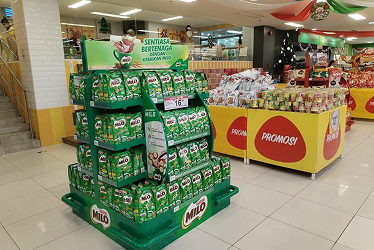
Cardboard is lightweight, printable and economical, especially for larger rollouts. It works well for short-term floor stands, countertop displays, dump bins and standees.
Many cardboard displays can also be flat-packed for easier storage and distribution. However, they are less suitable for heavy products, damp conditions or prolonged use.
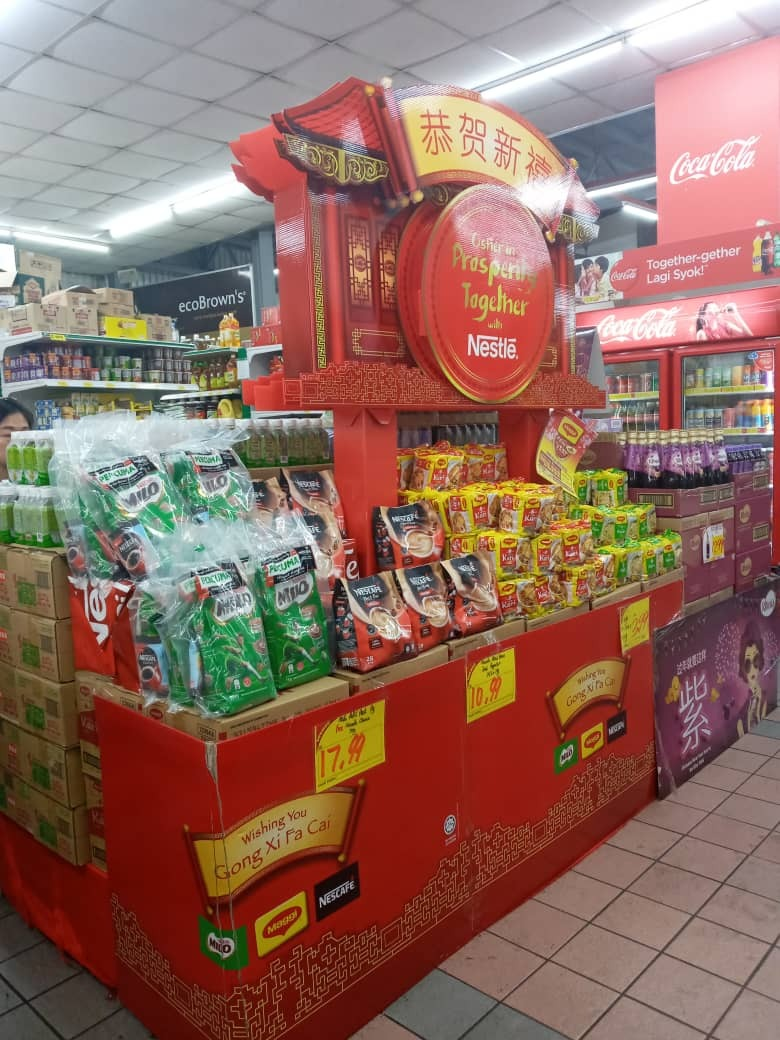
A corrugated promotional block creates substantial presence without the permanence of a long-term fixture.
Acrylic for a premium presentation
Acrylic gives displays a clean, polished appearance while keeping the product visible. It is especially popular for cosmetics, fragrances, electronics and healthcare products.
It is often used selectively for shelves, product holders, transparent panels or illuminated logos, where its visual impact matters most.
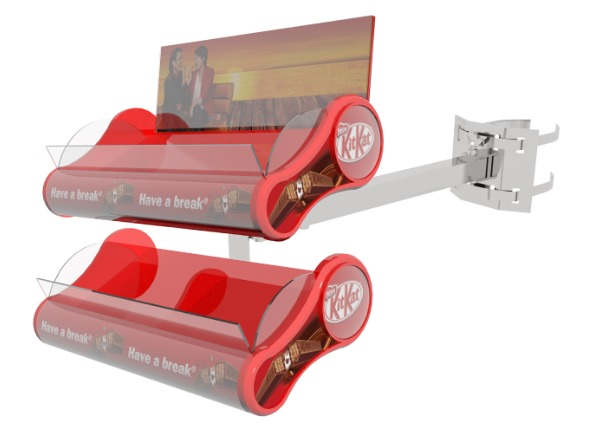
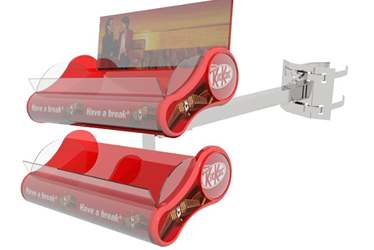
The KitKat Optimus uses acrylic and clamped components to keep the product visible at the shelf.
Wood for longer-term fixtures
Wood creates a stronger sense of permanence and can be painted or laminated to suit different retail environments.
It is commonly used for branded gondolas, shelving, promotional islands and shop-in-shop fixtures. The main considerations are its weight, installation requirements and protection from moisture.
Metal for strength and durability
Metal is suitable for displays carrying heavier products or intended for repeated use. It is commonly used for frames, shelving, hooks and mobile racks.
While metal fabrication may cost more, it can provide the strength and stability required for demanding retail environments.
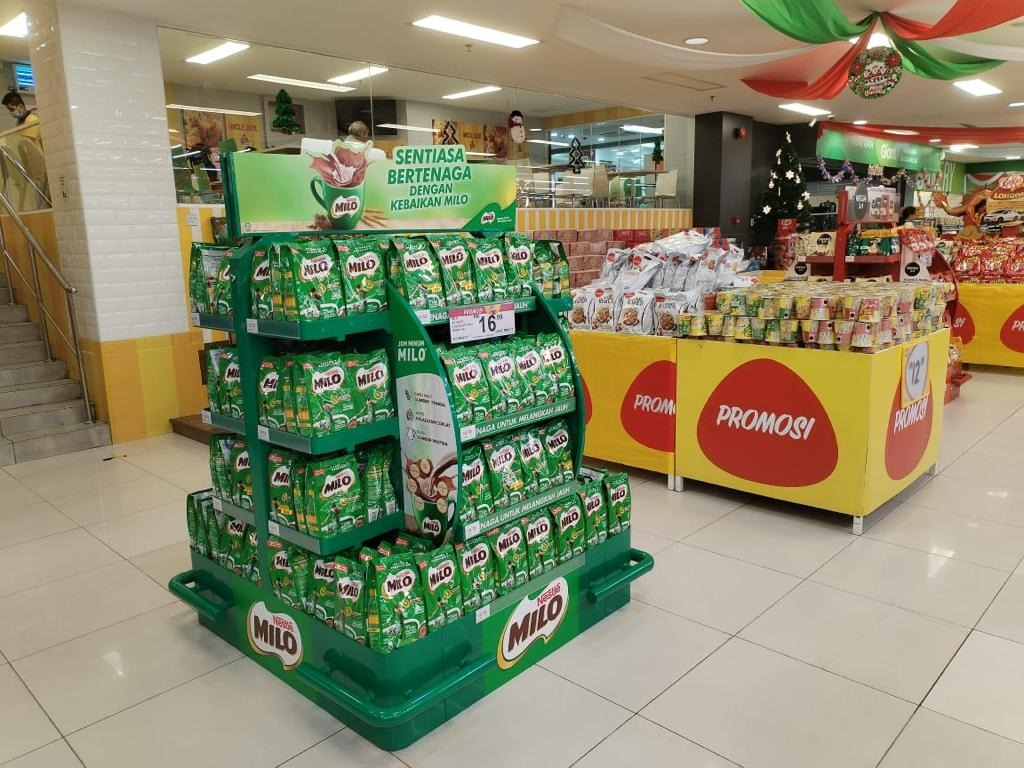
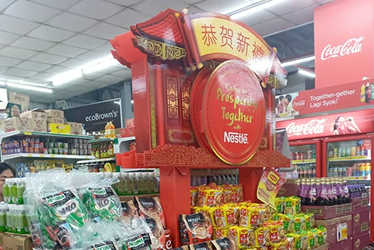
Nestle’s modular metal block was designed to carry heavier stock and withstand busy retail conditions.
Mixed materials can offer the best balance
Many displays combine materials rather than relying on one.
A metal frame may provide strength, wood may create visual substance, acrylic may improve product visibility, and replaceable printed panels may carry changing campaign messages.
This allows each material to perform the role it handles best.
What should guide the decision?
Before deciding, consider:
- Campaign duration:A short promotion rarely needs permanent construction.
- Product weight:Heavier products require stronger shelves and frames.
- Retail environment:Humidity, sunlight, limited space and shopper traffic can affect performance.
- Overall budget:Include transportation, installation and maintenance, not just fabrication.
- Sustainability: Consider whether the display or its components can be reused, replaced or recycled.
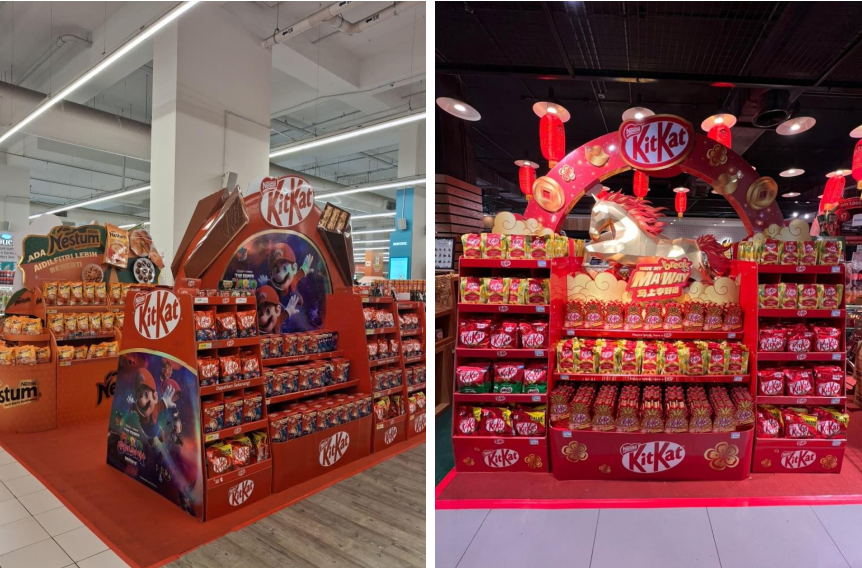
The same KitKat structure was reused across two campaigns, with the crown, panels and graphics replaced.
The best material is not always the most expensive
A well-designed cardboard POSM may be more suitable than a wooden fixture for a short nationwide campaign. Conversely, a reusable metal structure may deliver better value over several promotions despite costing more initially.
At INK Marketing, material selection is considered together with design, production, logistics and installation. The goal is to ensure that the display looks right, performs properly and makes sense for the campaign.
The better question is not simply, “Should this be cardboard or acrylic?”
It is: “What does this display need to do?”