Most POSM tells shoppers what a product can do.
Extra strong. Waterproof. Protective. Smart.
A more powerful display lets people see the benefit for themselves. When the product promise becomes part of the structure, the POSM stops merely making a claim and starts proving it.
Some of the clearest examples come from outdoor, experiential and retail campaigns. Their lesson translates easily to the point of sale.
Make strength visible
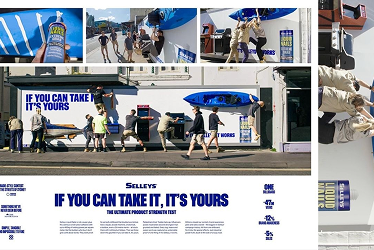
Selleys turned the holding power of Liquid Nails into a public challenge. Heavy objects, including a kayak and tool storage, were fixed to a billboard. Passersby were invited to pull them free and keep anything they could remove.
The idea needed very little explanation. Every unsuccessful attempt made the same point: the adhesive holds.
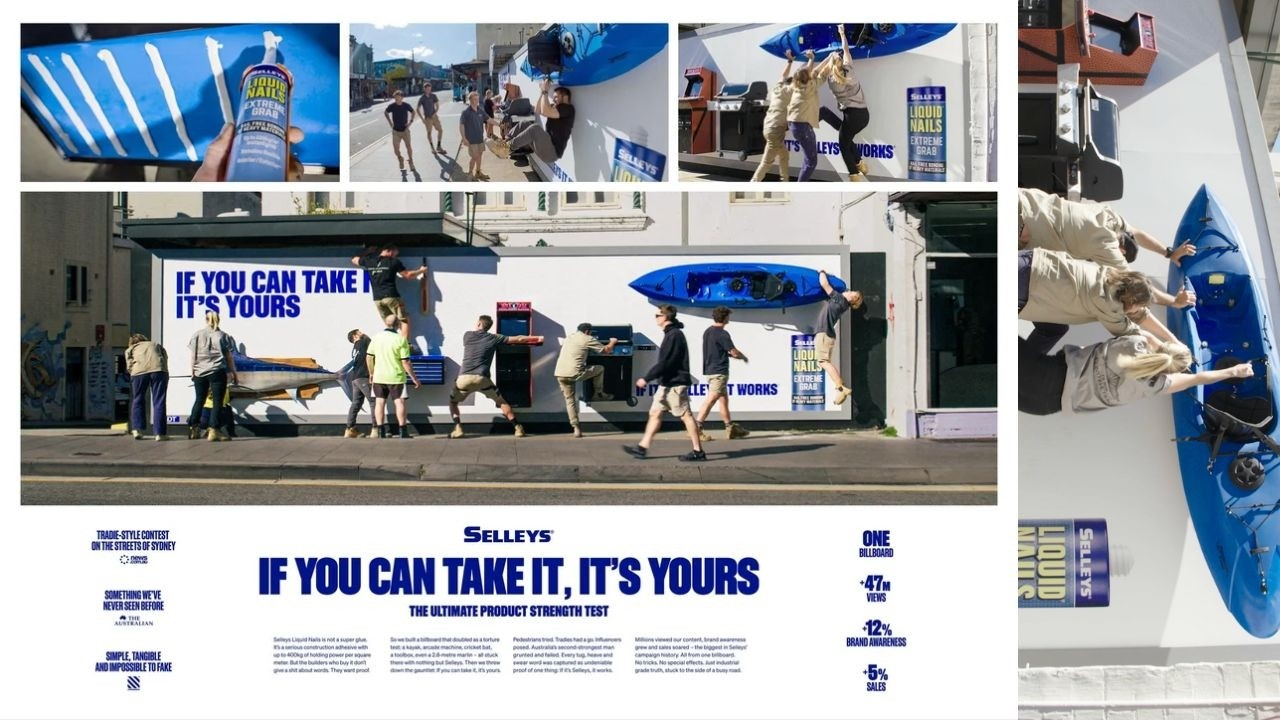
Selleys turned an adhesive claim into a public strength test. Source: Selfstorming
Place the product inside the problem
Sony took an even more direct approach with the Bottled Walkman. Its waterproof music player was submerged inside bottles of water and sold through vending machines at swimming locations in New Zealand.
The packaging, display and proof became one idea. Shoppers did not have to imagine whether the device could survive water. They saw it sitting in water before buying it.
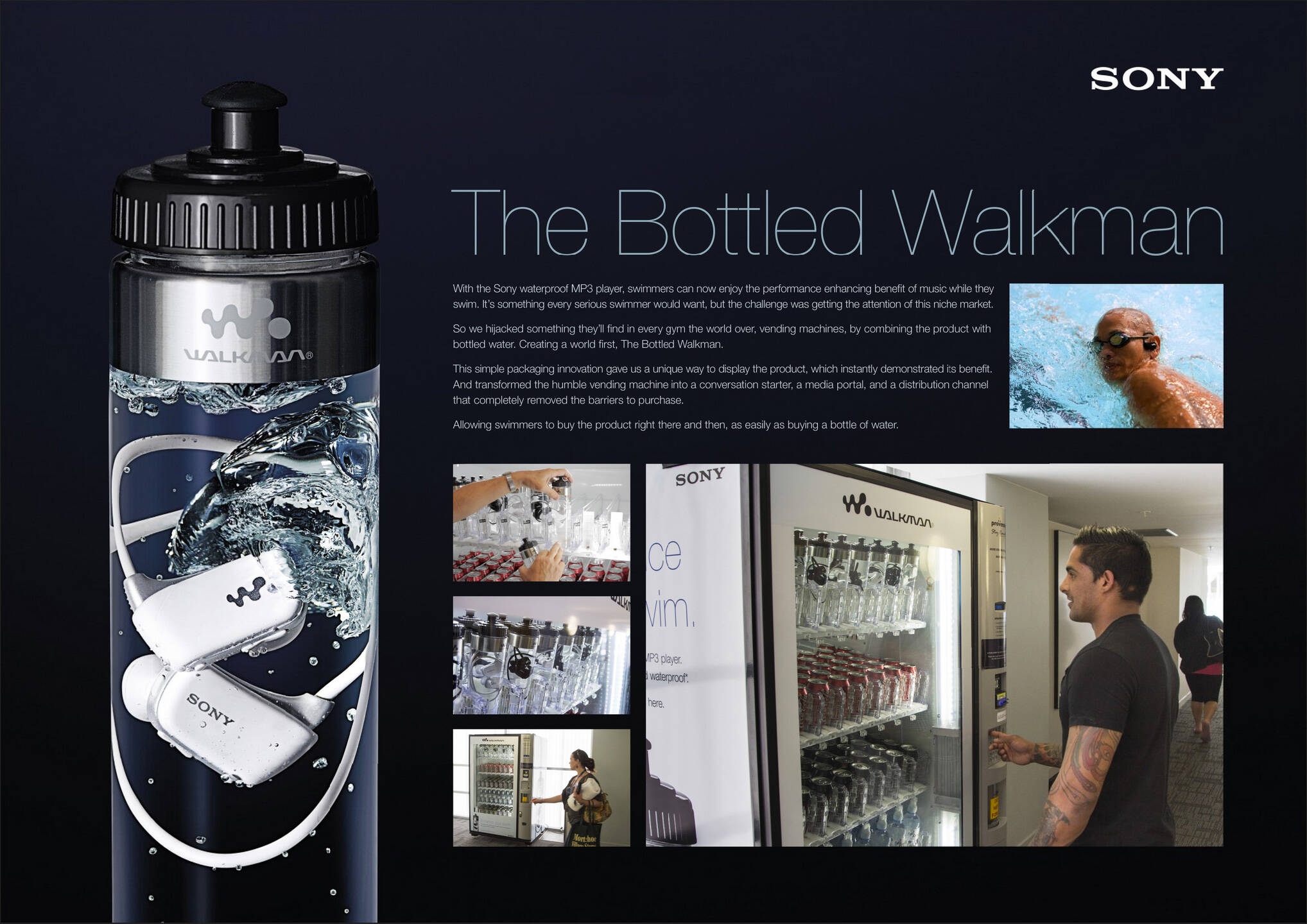
Sony sold its waterproof Walkman submerged in water. Source: Ads of the World
Let the surroundings complete the demonstration
BIC used the landscape around a billboard to demonstrate a razor’s performance. A giant razor appeared to have shaved a clean path through a field of long grass.
Nothing moved and nobody had to interact with it. The contrast between the cut and uncut grass made the product benefit instantly clear.
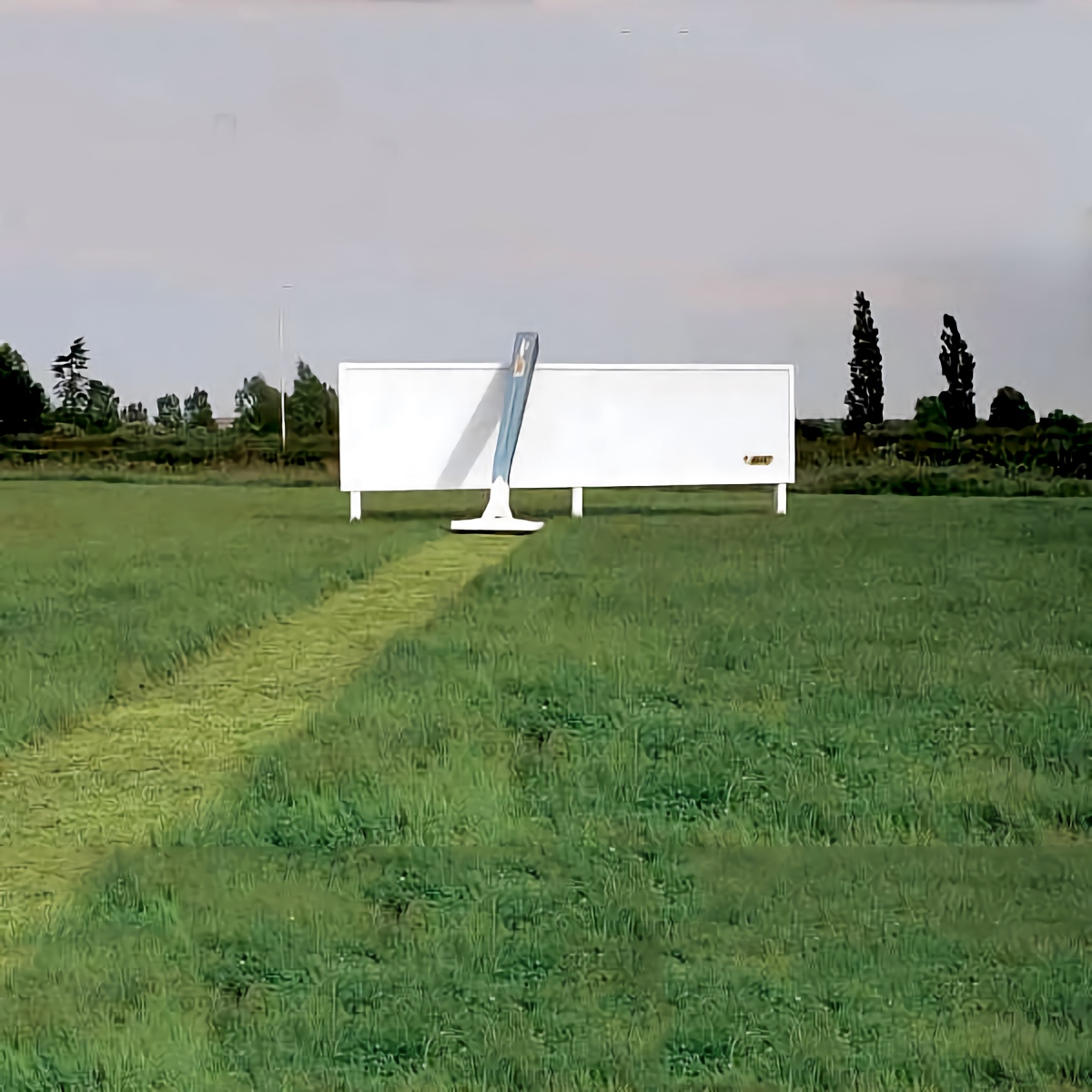
BIC used mown grass to demonstrate a close shave. Source: Quality Design
Extend the promise beyond the product
NIVEA Sun Kids expanded the meaning of protection. A magazine advertisement included a detachable bracelet that parents could pair with an app to monitor how far their child wandered on a crowded beach.
The bracelet did not demonstrate sunscreen directly. Instead, it made the brand’s wider promise of protecting children useful in another relevant way.
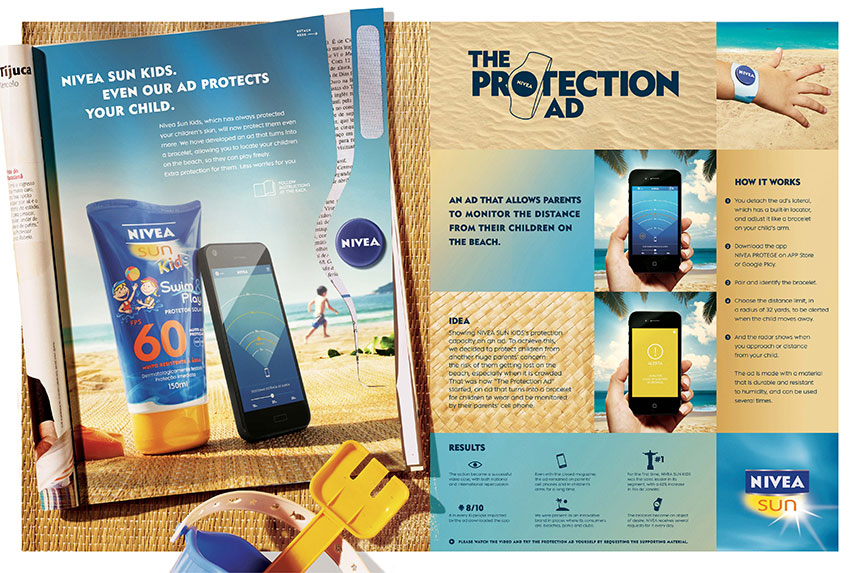
NIVEA’s print advertisement became a child-tracking bracelet. Source: The One Club
Make the medium behave like the message
IBM’s People for Smarter Cities campaign turned advertising panels into a bench, a ramp and a rain shelter. The structures did not simply discuss smarter urban thinking. They contributed a small, practical improvement to the city.
That made the message feel credible because the advertising behaved like the idea it promoted.
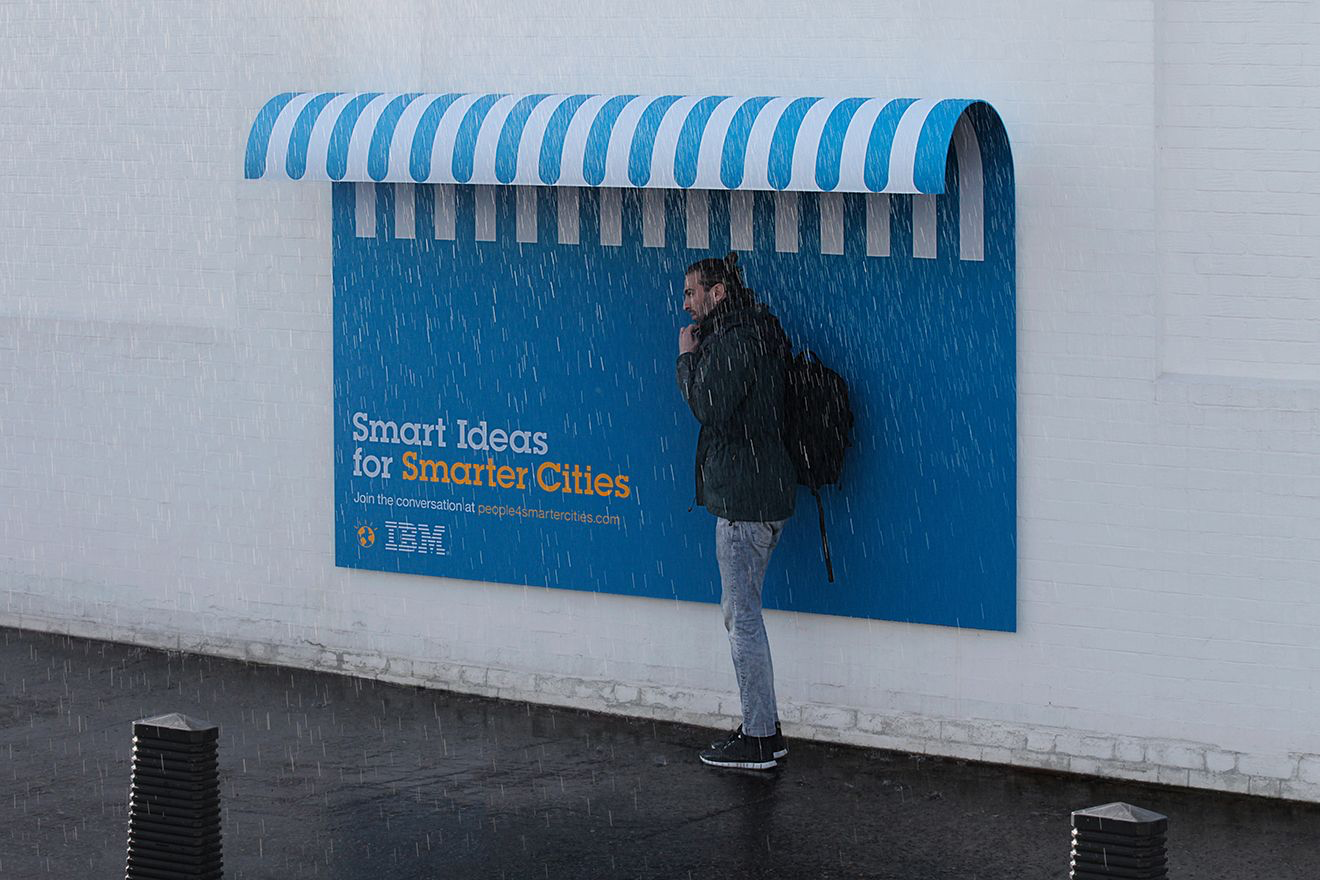
IBM’s billboard became a rain shelter, making a smart idea useful. Source: WIRED
Bring the same thinking into retail
POSM does not need a giant billboard or complicated technology to demonstrate a benefit. An adhesive display can appear to support an unlikely weight. A cleaning display can divide a surface into dirty and clean halves. A battery can power one small illuminated feature.
The important part is focus. Choose one promise shoppers can understand within seconds, then make the structure perform it safely and credibly.
Anyone can print the word “strong” on a display. A better piece of POSM makes strength feel real.