Major football tournaments do more than fill stadiums. They change the mood of supermarkets, shopping malls and retail stores, where entrances become players’ tunnels, gondolas turn into goalposts and trophy displays appear beside everyday products.
At first glance, these executions seem to be celebrating football. Their real strength, however, is that they borrow emotions people already bring with them: anticipation, pride, rivalry, belonging and the pleasure of watching a match together. Good football POSM does not need to explain why the game matters. It simply gives those feelings a physical form inside the retail environment.
Each example below illustrates a different way football can shape the shopper experience without relying on a famous player, a national team or a wall of tournament branding.
Selling the dream, not just the merchandise
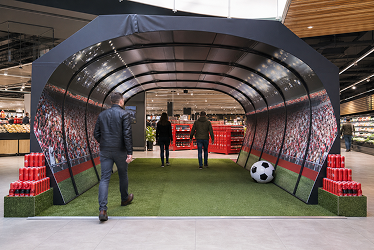
The walk through a players’ tunnel is one of football’s most recognisable rituals. It carries a sense of anticipation before the pitch is even visible. Recreating that passage at a store entrance lets shoppers experience a small part of the occasion for themselves, turning the route to the promotional area into part of the campaign rather than treating it as empty space.
The display still leads people towards products, but the merchandising is no longer the first thing they encounter. Emotion comes first. That makes the eventual product zone feel connected to match day instead of simply decorated with football graphics.
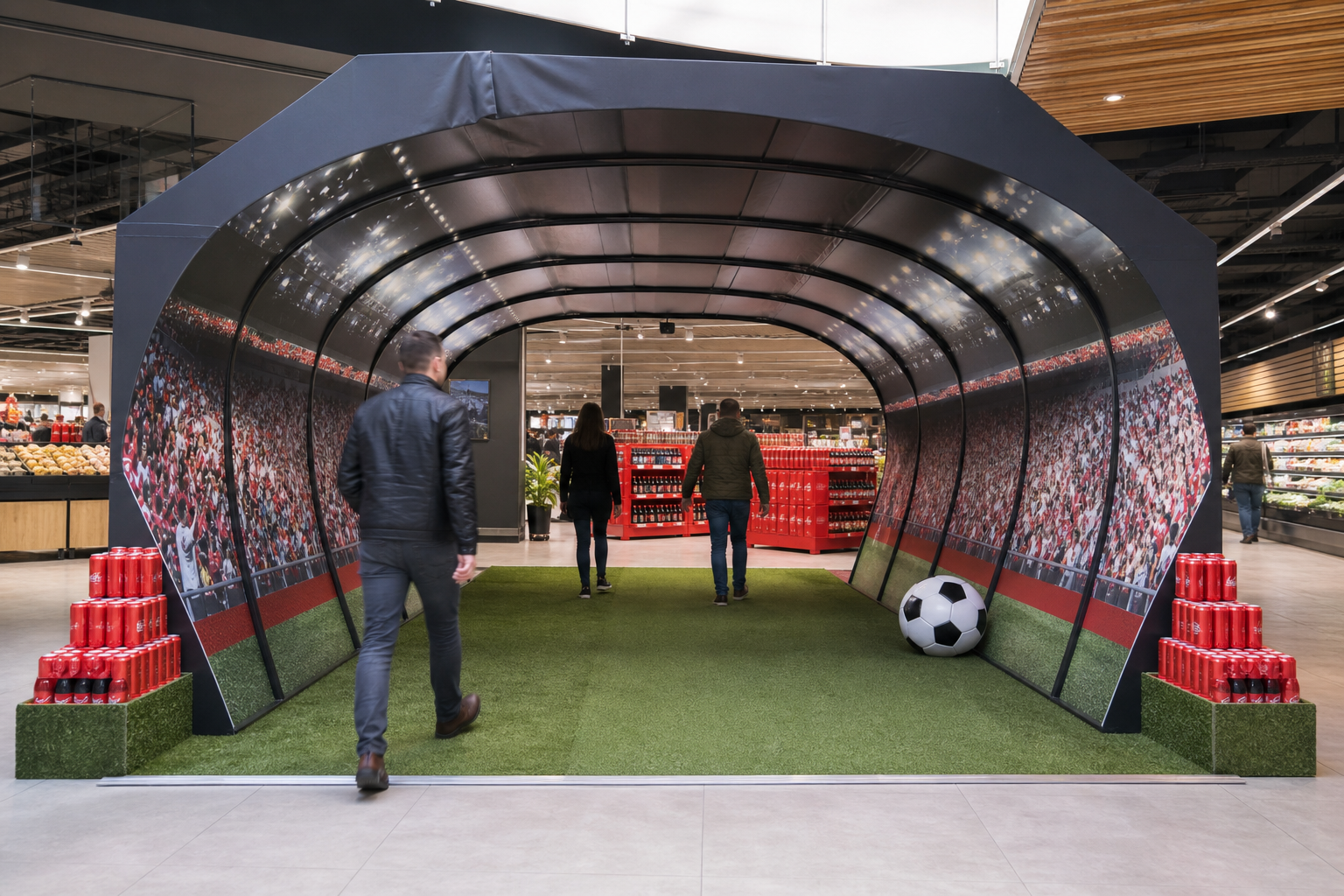
A players’ tunnel turns the approach to a promotional zone into part of the football experience
Familiar symbols do more of the talking
Football has an unusually strong visual language. A goalpost, a pitch marking or a net can establish the theme immediately, often with very little copy. That makes these forms useful in busy aisles, where shoppers have limited time to decode a campaign message.
A goal-shaped shelf display shows how a familiar symbol can remain practical. The frame creates recognition from a distance, while shelves and a netted dump bin hold the stock within a modest footprint. The idea is clear, but the unit still earns its place by functioning as a proper merchandising fixture.
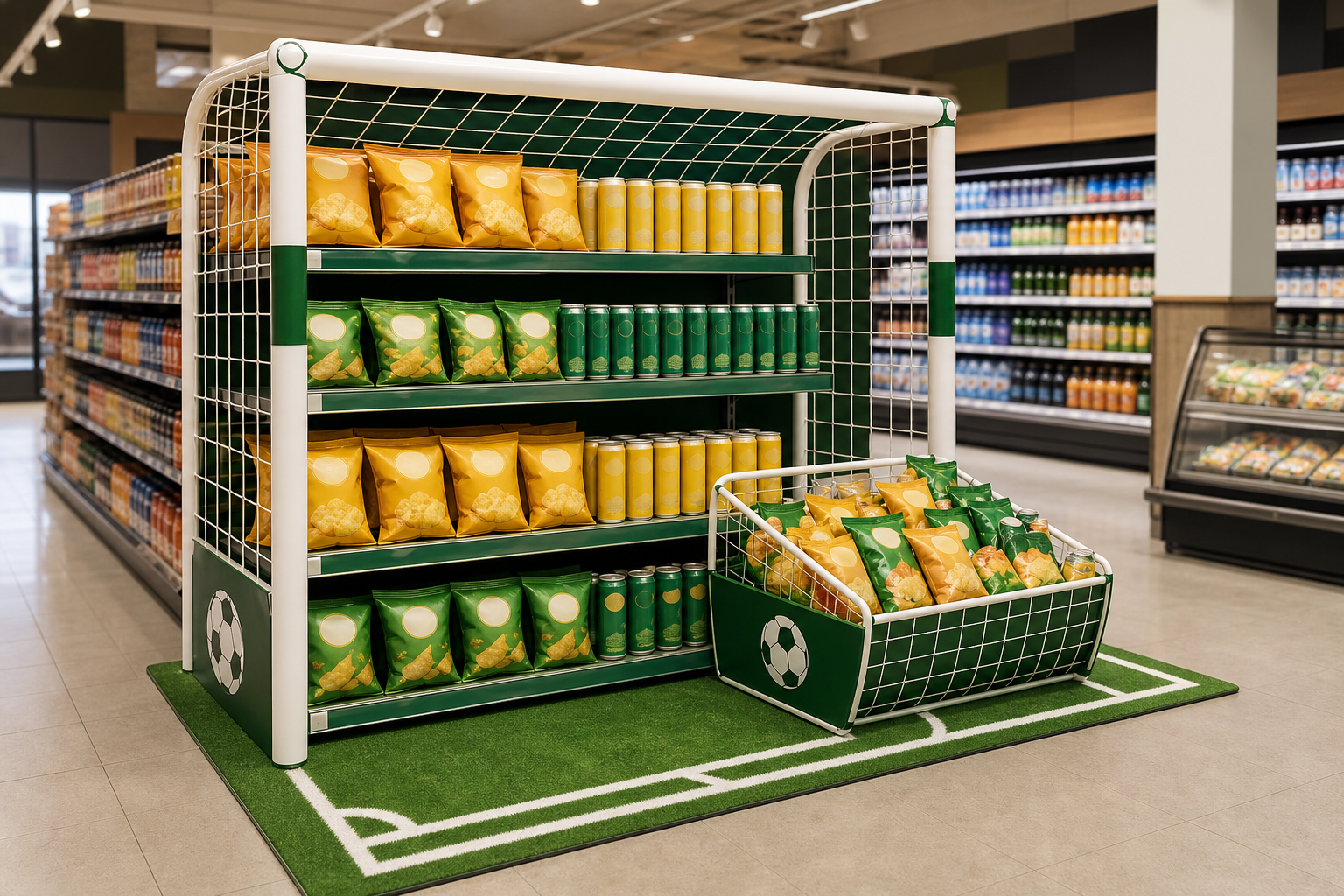
A goalpost can provide instant football context while still working as a practical shelf
Building atmosphere around the product
Football POSM can also make product comparison feel more relevant. In a sporting-goods store, a stadium-inspired boot display gives footwear a setting that connects directly with how it will be used. Turf, floodlight cues and tiered plinths create atmosphere, but the products remain accessible and easy to compare.
This balance matters. Retail theatre should support the shopping task, not overwhelm it. When the environment adds meaning while preserving clear product access, the display can hold attention and help shoppers make a decision at the same time.
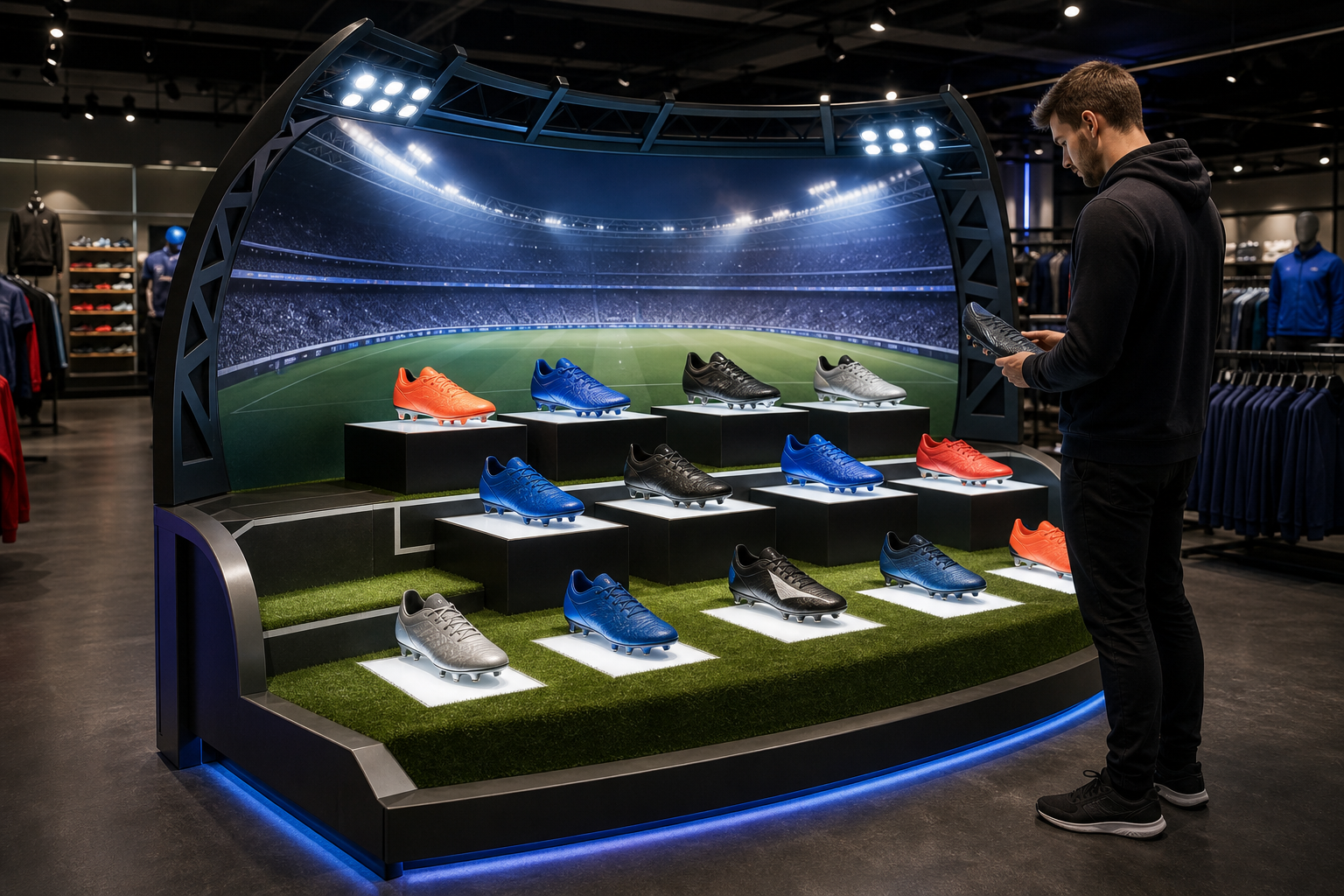
A stadium-inspired fixture gives football boots a strong sense of occasion
Selling the occasion around the game
For many brands, football is less about the action on the pitch than the shared occasion around it. Drinks, snacks and easy-to-serve products become part of watching the match with friends. POSM can make that connection visible by grouping complementary products and recreating the social mood of match day.
A celebration-themed endcap does more than dress a shelf in team colours. The centre-circle table, scarf-like details, pitch graphics and shared browsing space turn several product categories into one recognisable occasion. Instead of asking shoppers to consider each pack separately, the display helps them picture the gathering they are shopping for.
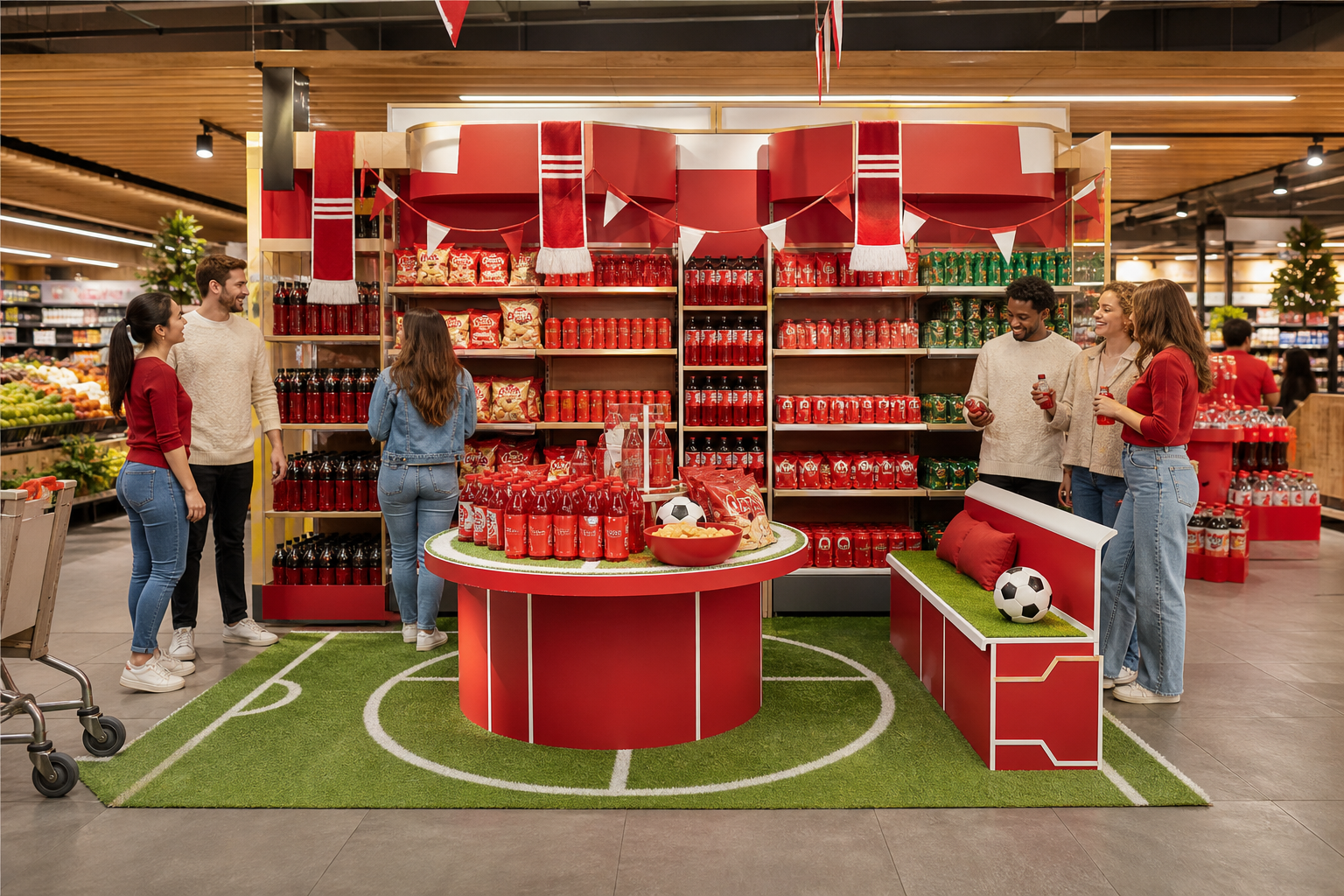
A match-day endcap can bring snacks and drinks together around a shared viewing occasion, helping shoppers picture the gathering rather than isolated products.
The lesson goes beyond football
Football gives marketers a head start because the rituals, symbols and emotions are already widely understood. The strongest executions use that familiarity with restraint. They do not add football imagery to every available surface. They choose the part of the game that best supports the shopper task, whether that is building anticipation, making a category easier to recognise, inviting participation, helping comparison or selling a shared occasion.
The same principle applies beyond sport. Strong POSM often begins with an emotion or behaviour the audience already knows, then gives it a useful physical form. When shoppers recognise the story before they read the message, the display has already done much of its work.