Walk through most retail stores and you’ll find the same challenge repeated aisle after aisle.
Hundreds of products compete for attention within a limited amount of space. Brands fight for shelf facings, promotional spots and visibility, often relying on larger graphics, brighter colours or bigger discounts to stand out.
But some of the most memorable retail executions take a completely different approach.
Instead of trying to win attention on the shelf, they create a branded environment around the product. They transform a section of the store into a miniature world that shoppers can step into, explore and remember. The objective is no longer just to display products. It is to make shoppers feel like they have entered the brand itself.
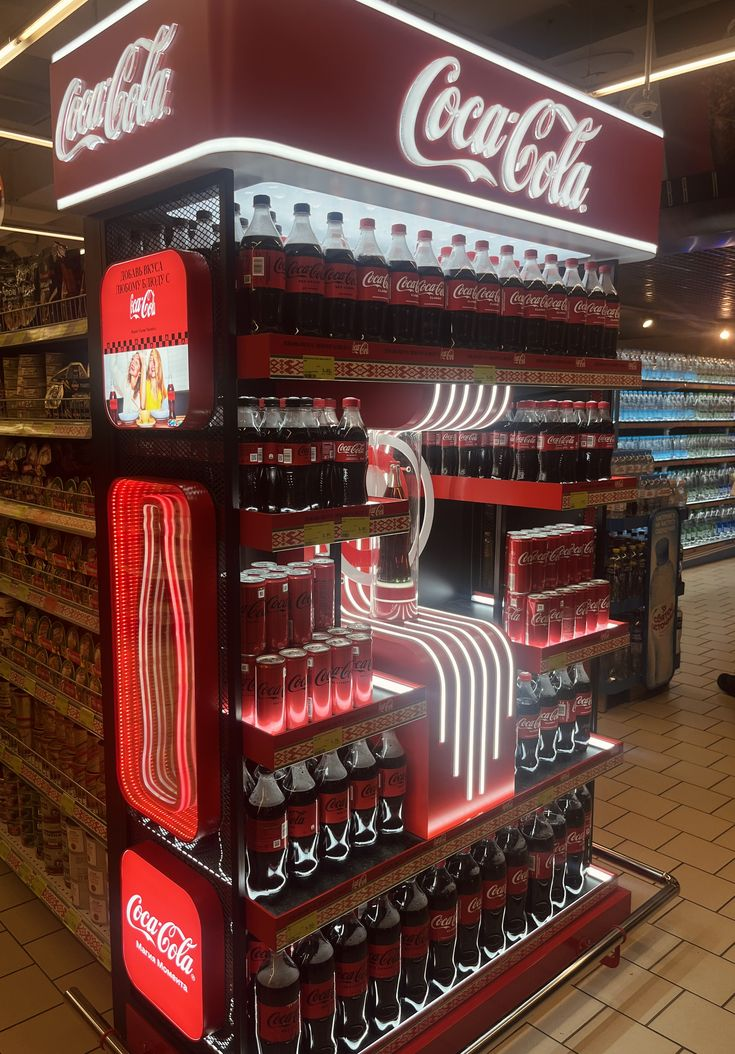
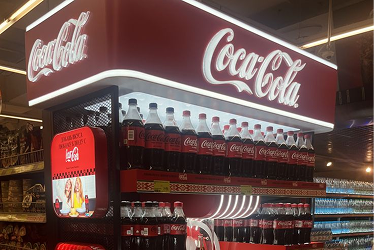
The Coca-Cola cooler display is a good example of this approach. Rather than functioning as a standard refrigerated unit, the structure turns the iconic Coca-Cola bottle into part of the retail architecture. The illuminated red colour palette, oversized bottle silhouette and dedicated display space immediately create a branded zone within the store. Even from a distance, shoppers know exactly which brand owns that space.
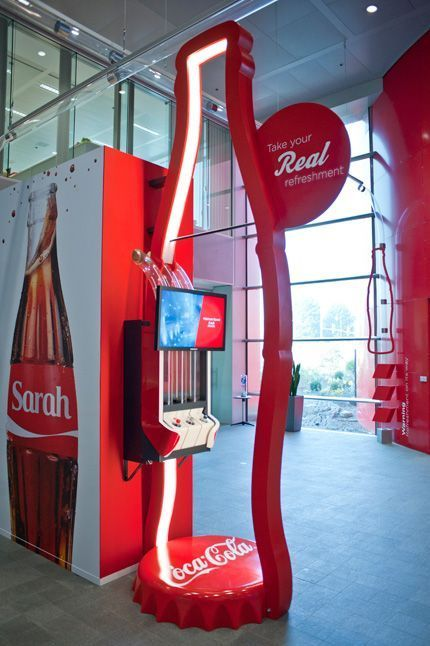
The same principle can be seen in the Coca-Cola bottle installation. Here, the product shape becomes the environment itself. The towering bottle structure creates an immersive experience that extends beyond product display and into brand storytelling. Shoppers are interacting with a physical representation of the brand.
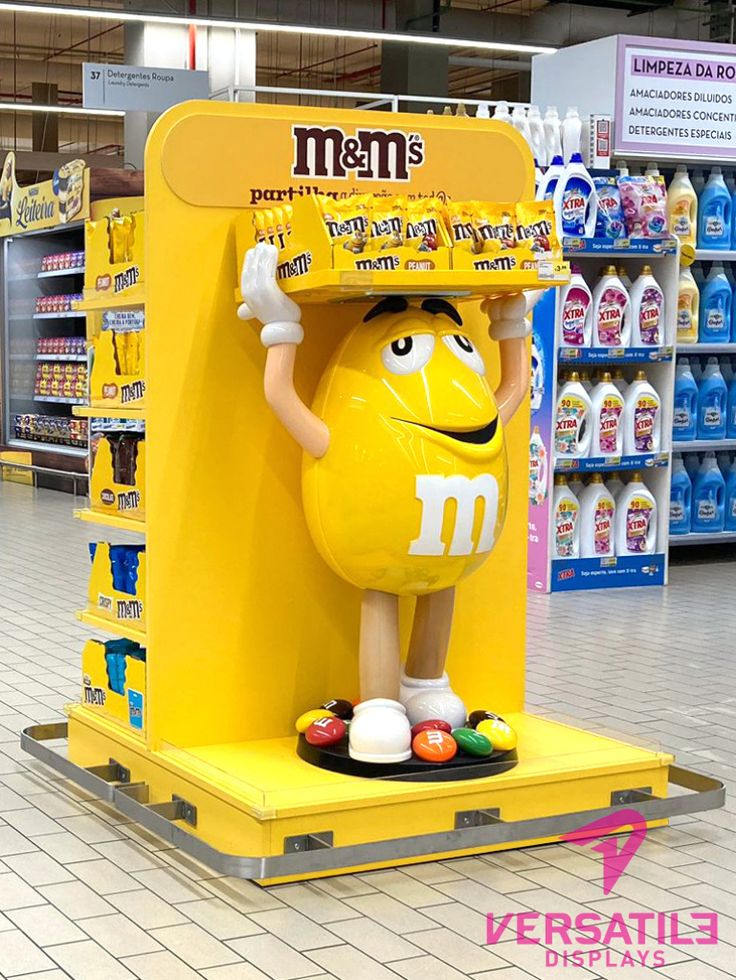
Some executions achieve this through character and personality. The M&M’s display uses the brand mascot as the centrepiece of the experience. The oversized character acts as both display and attraction, drawing shoppers into the space while reinforcing the playful identity that has become synonymous with the brand.
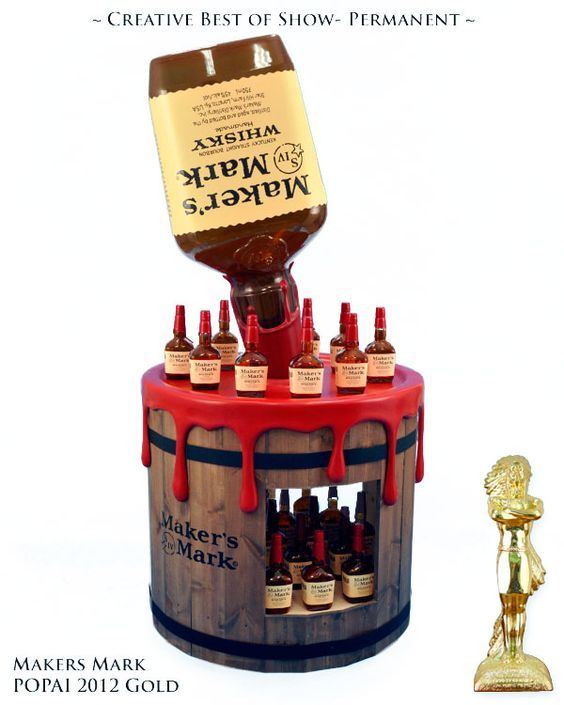
Others focus on bringing the product story to life. The Maker’s Mark display transforms a bottle of bourbon into a dramatic pouring installation, creating the illusion that the product itself is flowing into the display below. The execution immediately communicates craftsmanship, richness and product heritage without relying heavily on copy. The visual alone tells the story.
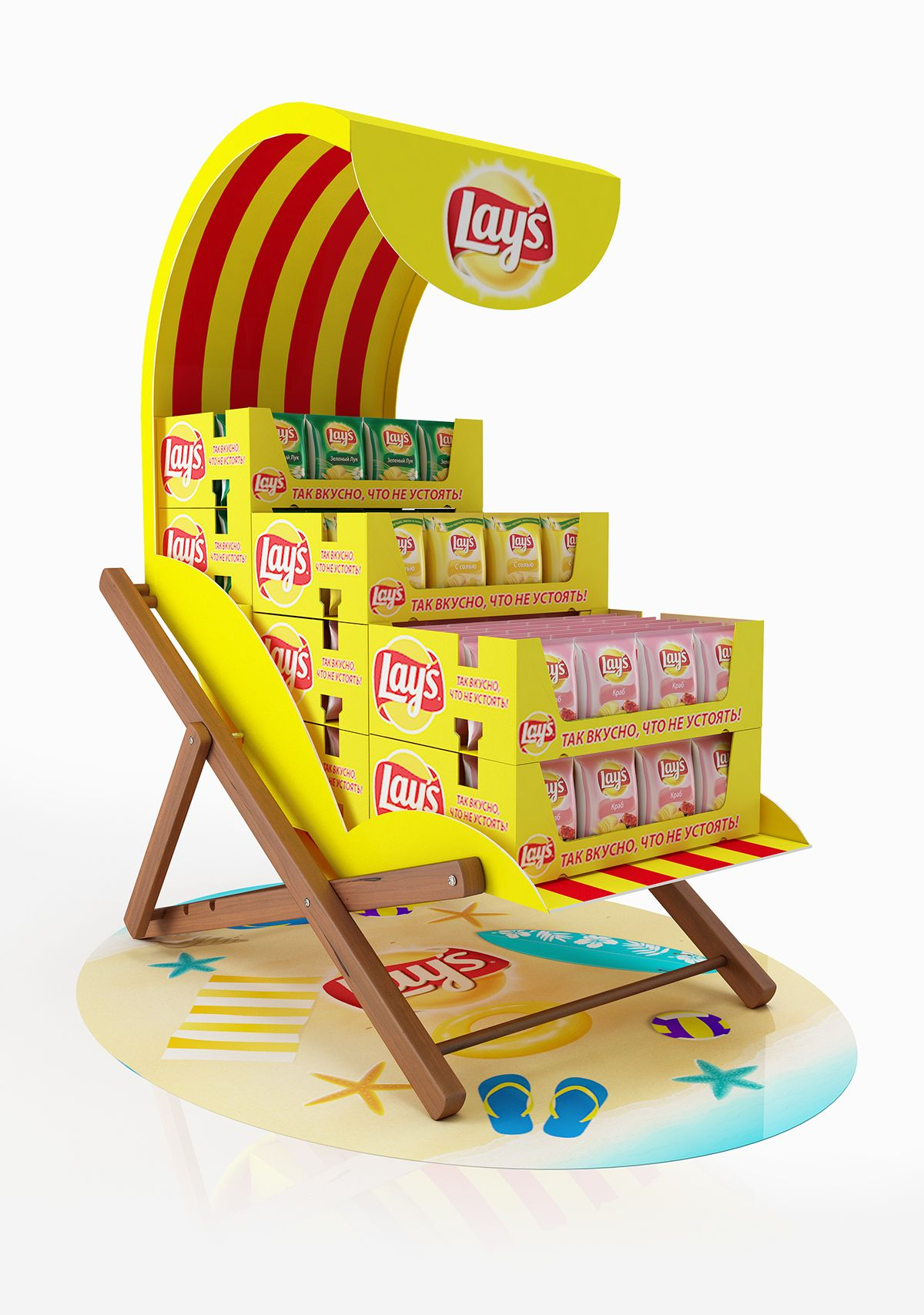
Even a simple category such as snacks can benefit from this approach. The Lay’s beach chair display recreates the feeling of leisure and holiday enjoyment directly within the retail environment. Rather than presenting boxes of chips on a conventional rack, the display transports shoppers into the occasion where the product is most likely to be enjoyed. It sells a moment, not just a snack.
What connects these executions is their ability to create immersion. By building a small branded world around the product, these displays create a stronger impression than a standard shelf arrangement ever could.
This is particularly important in today’s retail landscape, where physical stores must compete with the convenience of e-commerce. Online platforms can offer selection, pricing and convenience. Physical retail, however, has the advantage of creating experiences that shoppers can see, touch and remember.
The most effective retail displays transform a routine shopping trip into a branded encounter. They create a destination rather than simply occupying a location.
Ultimately, great retail POSM is not about fitting products into a display. It is about fitting shoppers into a brand story.