You need a display rack for an upcoming campaign. You send a reference picture to three suppliers and receive three very different prices. The picture shows the appearance, but leaving each supplier to guess the dimensions, materials, product load and delivery requirements.
Before contacting a display rack supplier in Malaysia, prepare these ten details. They help suppliers quote accurately and reduce changes during production.
1. What the display needs to achieve
Is it introducing a product, supporting a promotion or holding everyday stock?
Give the supplier one main objective. A rack for a two-week launch may need a prominent campaign header, whereas an everyday fixture may need easier replenishment and replaceable branding.
2. The products it must hold
Provide product dimensions, weight and packaging format, ideally with physical samples.
State how many units each shelf should carry. “Three shelves for drinks” gives much less useful information than “12 bottles per shelf, each weighing 1.5kg.”
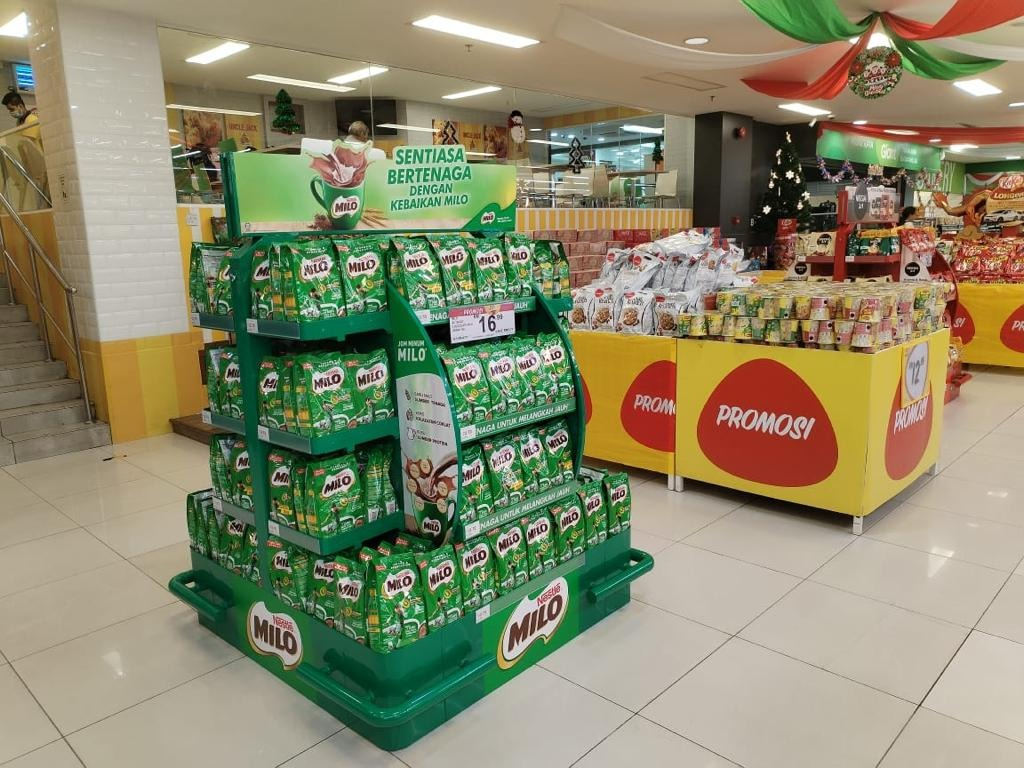
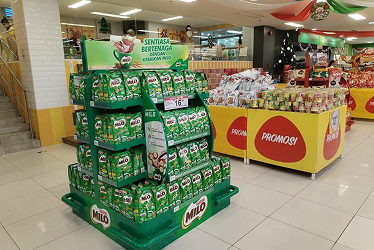
A stocked Milo rack shows why the brief should specify product size, weight and quantity per shelf.
3. Available space
Specify the maximum width, depth and height, including any retailer restrictions.
Include photographs of the intended location. A rack that fits the allocated floor space may still obstruct an aisle or hide neighbouring products.
4. Campaign duration
Give the start and end dates, and say whether the rack will be reused.
Duration helps determine the construction. A temporary promotion and a fixture expected to last through several campaigns require different specifications.
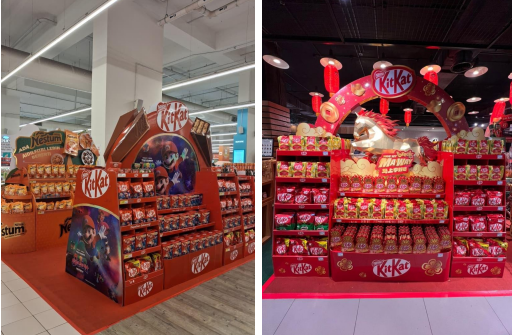
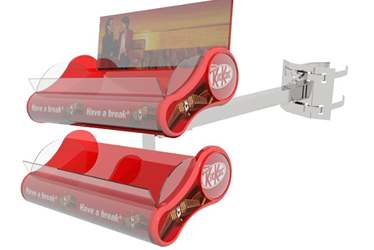
The same KitKat structure dressed for two campaigns. State whether the rack will be reused and which branding needs to change.
5. Store environments
List the retail formats involved: hypermarkets, pharmacies, convenience stores or traditional trade outlets. These can affect material selection and finishing.
6. Quantity and store list
State the number of racks and whether every store needs the same version.
Separate delivery locations in Peninsular Malaysia, Sabah and Sarawak. Different store formats may also require different sizes, rather than one rack adapted during installation.
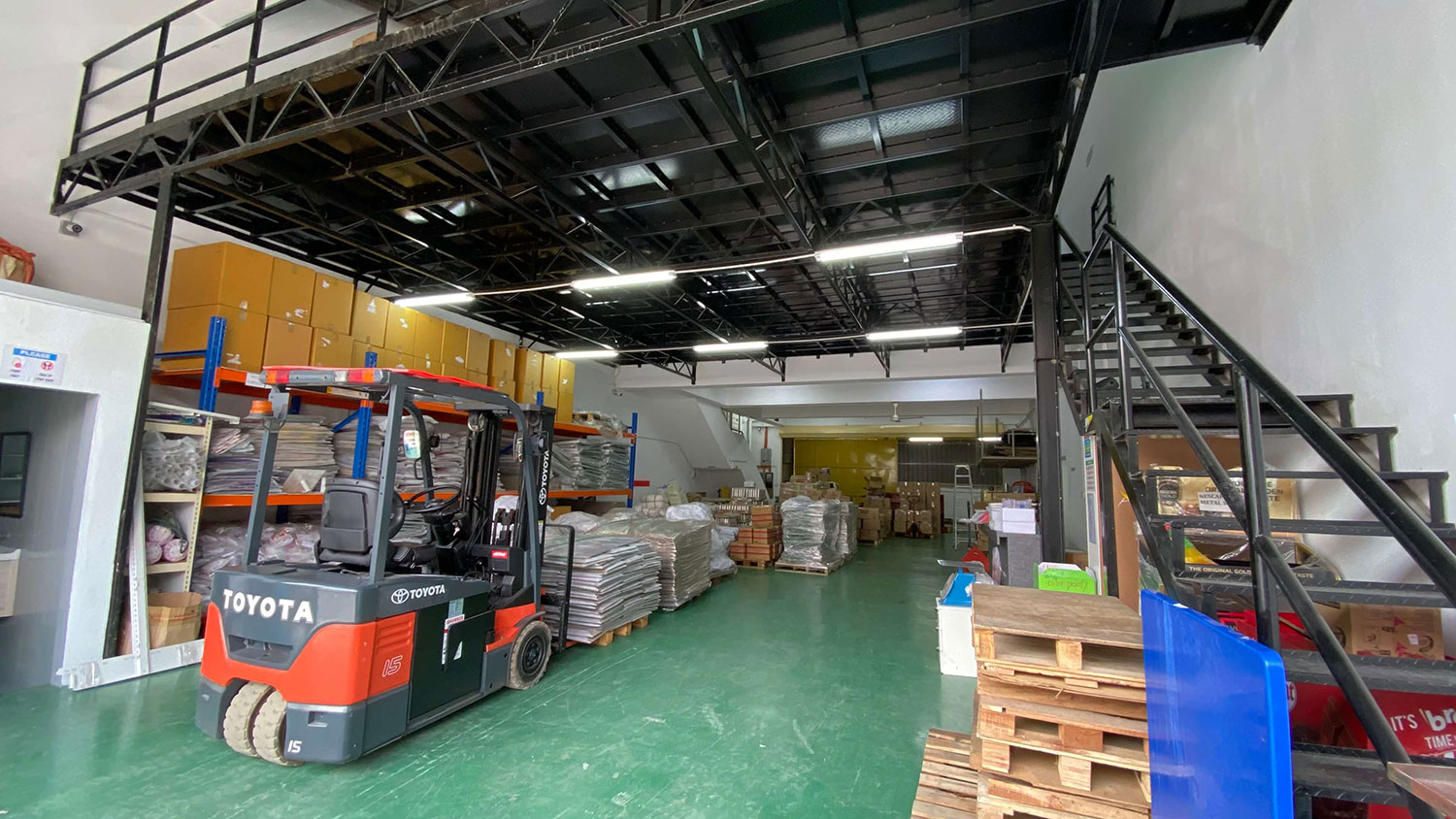
Packing and storage form part of the rollout. Include store quantities and delivery locations in the brief.
7. Budget and quotation scope
Share a realistic budget range and explain what it must cover.
Ask suppliers to separate design, sampling, fabrication, packing, delivery and installation. This makes quotations easier to compare and reveals costs that might otherwise appear later.
8. Artwork and branding
Provide the campaign key visual, brand guidelines, logos and required messages.
Clarify whether artwork is ready for production or needs adaptation. If you need a new display concept, say so, as resizing an existing visual is a different task from developing the rack itself.
9. Assembly and installation
Who will set up the racks: store staff, merchandisers or the supplier’s crew?
If staff will assemble them, specify any requirements for tool-free setup and instructions.
10. Deadlines and approval process
Give the required in-store date. Build in time to test the sample with actual products before approving the full order.
A clearer brief makes a better starting point
Start with what you know: what the rack needs to do, where it will go and your available budget. Material choice, structural design and other technical details can be worked out with your supplier.
You don’t need to have all ten answers ready. At INK Marketing, we can guide you through the brief, help you identify what matters for your campaign and recommend a practical way forward.